Editorials
A Visit to the Bloody Set of ‘ChromeSkull: Laid to Rest II’!

In the annals of slasher-movie history, the kills in Robert Hall’s Laid to Rest are some of the most realistic and elaborate ever committed to celluloid. Now, everyone’s favorite chrome-masked killer – I like to think of him as Peeping Tom‘s “Mark Lewis” on steroids – is back for a second round with Chromeskull: Laid to Rest 2, again directed by Hall and featuring even more of the top-notch effects work that made the first film so memorable. Back in November B-D reporter Chris Eggertsen had a chance to visit the set, located at the Almost Human compound in Los Angeles, CA, and interviewed a slew of cast and crew while also being granted the opportunity to witness (sort of) an epic single-shot triple-kill scene that will have gore-fiends everywhere salivating once this baby hits the market. See inside for the full report.

“The sheer amount of how insane some of the kill scenes are is really the crazy part. Imagine the Jonathan Schaech kill in the first one; every one of them is that elaborate.” – Almost Human special effects makeup artist/shop manager Erik Porn
“The word ‘ambitious’ is probably an understatement. I call it insanity“, said special effects makeup artist/Almost Human shop manager Erik Porn regarding both the number of kills in the movie (eleven, as opposed to the first film’s six) as well as their crazily elaborate nature.
Porn was currently in the Almost Human makeup room (Almost Human being the A-list, L.A.-based special effects studio founded by Hall) prepping the forehead of actor Alex Jovica (playing “Cochern“, a detective on the Chromeskull case) for a bit in which his character gets a hatchet to the head, in a single-shot, triple-kill extravaganza that would shortly be filmed on a neighboring soundstage. The thesp comically sported two or three circular silver magnets on his brow (“I look like a Buddhist monk“, he remarked), implanted into an impressively realized layer of makeup.
Porn went on to demonstrate the gag for me by picking up the “hatchet” – boasting magnets of its own and cut off at the end so as to suggest its “submersion” deeply below the actor’s dermal layer – and attaching it to Jovica’s forehead via the magic of magnetism. The seemingly-simplistic effect (but not really), accomplished through the wonders of science, garnered a big fat smile of appreciation from me, and if all goes well it should play off beautifully on screen. Of course with Hall at the reins, you can be damn sure it’ll look as realistic as if Jovica were being murdered right before our very eyes.
“Just about every death, Rob’s like, ‘I’m not happy’“, producer Kevin Bocarde (who co-wrote the sequel’s script with Hall and also executive-produced both Laid to Rest and Hall’s earlier directorial effort Lightning Bug) remarked as I sat with him in the catering room behind the soundstage where they were currently preparing to film the ambitious triple-kill scene. “I just think you could’ve actually killed someone for real and Rob might’ve been like, ‘it’s not good enough’.”
Bocarde was joking on that last part (at least I think so), but at the end of the day it’s just that perfectionist quality which made the kills in the first movie look so impressive. Whether you enjoyed it as a film or not, there is a nevertheless a harrowing realism in the Laid to Rest murders you can’t help but stand in awe of, and while this painstaking attention to detail might prove a point of frustration during the production process – and it does, for everyone involved in their creation no doubt – it also results in a fantastic final product. Given the increased number of complex kills in this installment, however, not to mention a shorter time period in which to accomplish them, there was definitely an underlying sense of exhaustion in the air.

“It’s almost crazy how much they’re trying to top the first one“, said Porn. “This has maybe three times the amount of carnage…the sheer amount of how insane some of the kill scenes are is really the crazy part. Imagine the Jonathan Schaech kill [in which his character literally has his face sliced off] in the first one; every one of them is that elaborate.”
So clearly the film is looking to appeal to the audience that made the first film a success, but what of horror fans who demand more than just a few great gore effects to keep them satisfied? If there’s one major complaint that has been echoed ad nauseam by those who don’t count themselves as fans of the first installment, it’s that the film functioned as a showcase for Almost Human’s spectacular effects work while failing to establish itself as a compelling piece of cinema outside of all the arterial blood spray and spilled guts. Interestingly, it’s a sentiment the director himself seems – at least in part – to agree with.
I sat down with Hall in the parking lot outside the soundstage while he enjoyed a quick break from the long setup required for the upcoming single-shot kill scene. He appeared understandably ragged and tired, clearly sapped from the taxing two-and-a-half-week principal photography period. In between answers he took long drags off a cigarette, considering every question through what I expect was a haze of stress and exhaustion (all a part of the creative process).
“I was gonna [hand over the reins] with this one“, he told me, admitting that if it weren’t for financing troubles on other projects he’s been trying to get off the ground he probably wouldn’t have gotten behind the camera – in a directorial capacity, anyway – for the follow-up. “But it’s cool, I’m glad that I’m not because I’m having a lot of fun with it. And it’s also good cause I get to sort of…I won’t say ‘correct’ some of the mistakes from the first one, but I definitely get to re-visit and go, ‘ok, we know you love Chromeskull, [now] here’s another movie around Chromeskull that I think is much better’.“
Let me pause here for a second. I know this may come a shock to some of you, but not all of the effects in the film – both here and in the original – are 100% practical (gasp!), and it was a myth Hall definitely seemed eager to dismiss.
“There is a heavy amount of practical stuff in both movies, but it always has digital augmentation“, he said, while admitting that he too dislikes the sort of overtly CG movie effects that seem to have been pulled from the latest Xbox 360 release. “I think people generalize it too much. I think they don’t understand what they’re saying most of the time when they say ‘I don’t like CG!’ Because the reason that people liked the kills in ‘Laid to Rest’ was actually for the most part because of the place that we’re at with digital technology. It’s not because I went practical. Now what I did do is give you so much great practical stuff that you thought you were seeing all practical stuff. But the nuances that made those deaths great were all as a result of where we are with technology.”
Ok, everybody got that? Good. As for the story, and the performances, and the characters…well, unfortunately that’s something that simply cannot be fixed with a computer, and Hall clearly agrees that some of the criticisms of the first film were valid. So exactly how is he intending on addressing them?
Well for starters, there’s a much greater emphasis on plot and character than there was in the previous entry, in a way that will hopefully please the critics of part one (Hall also made sure to point out that two of the major complaints he heard from horror fans regarding the first film -none of the characters seemed to have cell phones and there were too few cops – have been more than addressed in the sequel). Included in the fleshed-out Chromeskull (or “Chromey“, as everyone seemed to be calling the character on set) mythology is the revelation of an organization that is somehow connected, behind the scenes, to the killer’s earlier series of sadistic murders. However, as Hall made perfectly clear during our conversation, this revelation is much more about the “how” than the “why“. In the grand tradition of narrative subtlety, he prefers to leave Chromeskull’s core motivations up to the imagination.
“I always think it’s super cheesy to spell everything out for the audience“, he told me. “No matter what I would come up with – I could get Frank Darabont in here and be like, ‘what do you think?’ And it wouldn’t be good enough. No explanation is good enough to go, ‘This is why he does it. He’s pissed at his mom. Kids made fun of him’. Whatever! It doesn’t make any sense. I think we’re all pretty smart and we live in this world where we know people do fucked up, perverted, horrible things. And we will never, ever know why Jeffrey Dahmer had people in his house. Ever! Like decapitated hookers or whatever. I don’t know why the guy in Canada a year and a half ago stabbed the guy with the iPod next to him and severed his head and walked to the front [of the bus with it]…If you were even to ask these people, I don’t think you would get a clear enough explanation to put it in a movie, so I think Chromeskull is one of those people…his kills are obviously sexually charged, and that’s all you need to know. I think it’s much scarier that way.”
It was a sentiment agreed to not only by co-writer and producer Kevin Bocarde – who expressed that one of his main attractions to the first script was the fact that we never find out why Chromeskull kills – but star Nick Principe, returning for his second outing as the savage masked killer.
“You still don’t get a backstory with Chromeskull, and I don’t think we ever will do a backstory, because I always like to say evil doesn’t need explanation“, Principe told me as I sat across from him in the catering room adjoining the soundstage. “Evil is just evil. It existed before man; it’ll be here when we’re gone.”
Lest we forget, Chromeskull’s specific brand of evil was nearly snuffed out at the end of the first movie, when his face was not only horribly melted by acid but caved in with a baseball bat wielded by “The Girl“/aka “Princess Gemstone“. A gruesome, seemingly irrevocable fate, begging the question of exactly how Chromeskull will manage to return in this installment short of being resurrected from beyond the grave. In other words – do we have another Jason Voorhees on our hands?
“I personally contacted some cosmetic surgeons“, said Principe regarding the feasibility of Chromeskull’s resurgence minus (a line of inquiry also extensively tackled by Hall, who undertook two months of research before determining it was possible). “[I asked], ‘what if someone had their face melted off, all the muscle tissue was gone, and there was nothing but the skeleton, and then the skeleton of the front part got shattered – is there any way that someone could walk away from that? And they were like, ‘well, if the brain wasn’t too badly damaged, and they got immediate medical attention – sure they could live, but they would not be pretty whatsoever’.”
“He’s never gonna be selling his soul to Satan or whatever“, stated Bocarde, though he wouldn’t 100% rule out the insertion of some supernatural components, say, “five movies” down the line. “Yeah, there’s a fantasy element to obviously a guy in a mask running around killing people, getting shot and keeps coming, yes. But we try to keep it somewhat grounded in reality.”
Given that the second film will, by the producer’s assertion, continue exactly where the first one left off, the concept of “reality” certainly plays a role in the first half of the film, given the amount of time it will take for the tech-savvy killer to recover from his severe injuries. And this is precisely where series newcomer Brian Austin Green – playing the character of “Preston” – comes into the mix. While the former 90210/ Sarah Connor Chronicles star wasn’t on set that day, Principe did delve a bit into Green’s function in the film.
“He’s kinda like [Chromeskull’s] underling if you will“, said the long-limbed actor, rocking his particular brand of sleepy-voiced charm. “He helps me clean up my messes so nobody notices or whatever. And he starts to want to become me. This is all during my little healing process from the first film. And you find out that the hand at the end of the first film was actually his hand, not mine, taking the camera. So there’s a little bit of a period of time where I’m healing, where I’m not really in it as much. Well, killing at least. There are lots of scenes of me healing and dealing with staph or whatever, and he handles some of the murders, and that pisses me off. And then I go on a rampage.”
It was this quote that put the “assembly cut” footage I’d earlier been shown (by Hall’s lovely assistant, multi-hyphenate horror chick Heather Wixson) into context. The footage basically consisted of Green’s character taking on the killer’s persona to “[tie] up some loose ends from the first [movie]” (Wixson’s description), in one clip receiving a “Chromeskull” tattoo and later donning the mask when he murders a young dark-haired woman by splitting her open. To accomplish that kill in a single shot, Hall utilized, in his own words, “an old magician’s trick“, the secret to which I won’t spoil here but one which was quite seamless and impressive when I watched it playing out on screen.
To sum up, the bare bones of the plot is essentially this: a) Chromeskull is saved from certain death by the organization that supports his activities; b) while Chromeskull is recovering, Preston (Brian Austin Green) sets out to take on his identity; c) Preston takes care of “the girl situation” from the end of the first movie and hunts down and captures Tommy (Thomas Dekker, in a greatly-expanded role); d) a revived Chromeskull stalks and snatches a new sexy blonde named “Jessica Cannon“, played by Mimi Michaels (Boogeyman 3); e) Chromeskull and Preston face off as the cops close in on the secret headquarters where Tommy and Jessica find themselves imprisoned.
Also joining the series this time around (in the role of “Spann“) is scream queen Danielle Harris (what low-budget horror flicks hasn’t she appeared in lately?), who wasn’t on set that day but whose character was described to me as another behind-the-scenes player in Chromeskull’s sick games. The prolific actress agreed to appear in the film but requested not to be cast in the “damsel in distress” role horror audiences have grown accustomed to seeing her play.
“She had said to [Rob], ‘I wanna do your movie, but is there any way I could do something different for me?’” said Bocarde. “And we’re like, ‘great, awesome’. Let’ s find something different for you to do. And I remember Rob sat down and I was like, ‘ok, let’s have her do this, this, this…’”
Also joining the huge “who’s-who” cast – in a bid by Hall and Bocarde to one-up the first film performance-wise – are television veteran Gail O’Grady (NYPD Blue, American Dreams) in the role of “Nancy Cannon“, 6’5” bruiser Brett Wagner (The Crazies), and Owain Yeoman, currently starring on The Mentalist, as “Detective King“, who leads the quest to locate and rescue Tommy and Jessica from Chromeskull’s clutches. Yeoman actually stepped in at the eleventh hour for actor Michael Biehn, who was originally cast in the role, when Biehn backed out of appearing in the film at the last minute to star in another project. And while there was clearly some bad blood there (“it’s too bad when you find out childhood heroes suck in real life“, remarked Principe), Yeoman nevertheless proved to be a more than adequate replacement.
“Owain’s been awesome“, enthused Bocarde. “There was a night [he] actually bought a coffee cart for everyone, just had this truck come out and make coffees to order and lattes and other [stuff].”
“Owain is probably better than Michael ever would’ve been anyways“, asserted Principe.
“I’ve never been offered a job at midnight before“, laughed Yeoman about receiving the belated offer to appear in the film. “[Rob] called me at like ten to midnight, and I was in bed. And he was like, ‘you fancy doing this movie?’ And I was like, ‘sure, when does it start?’ And he goes, ‘you started three days ago’.”
Despite the actor’s stint as a series regular on the top-rated CBS procedural, luckily Yeoman – who had worked with Hall on the pilot of The Sarah Connor Chronicles, in which he played the role of a Terminator known as “Cromartie” – was able to carve out enough time in his schedule to join the Laid to Rest fold.

“I was lucky enough to have [Rob] do some second-unit stuff with me on ‘Sarah Connor’, where he took charge of some of the action stuff“, said the square-jawed Yeoman, quick to laugh and giving off a genuinely friendly vibe. “He is incredibly relaxed, he knows what he wants. And I think that’s…you know, that level of decisiveness is something that as an actor I always appreciate, someone who knows their stuff. Working in T.V. you get to see a very quick turnover of directors, so you get to work with a lot of people who have very different styles. And the one thing that I always find most effective as a director is someone who just comes prepared, and who knows what they want, and can be in a good dialogue.”
Yeoman’s almost ethereal co-star Mimi Michaels, who I spoke with as she was sitting in a makeup chair getting a “leg wound” inflicted by Chromeskull applied to her calf, similarly raved over the director.
“He’s great, he’s so open to hearing what the actor has to say“, she said with a smile. “He lets you have freedom and he lets you play, but he keeps you on track. He’ll throw out little things here and there, say things that’ll just be right on the mark and really get you to that place that you need to go.”
And boy, does her character go places.
“It’s been pretty exhausting“, she said, reflecting on the intensely physical nature of her role. “It’s a lot of running around, crying, screaming, being thrown around…fun stuff. I like that.”
Also doing time in the makeup room that day was Brett Wagner, who plays the role of “Tiny“, one of the detectives on the case, who is searching for missing comrade “Holland” (played by former adult actress Angelina Armani). The beefy actor, who worked with Hall during the shoot for last year’s The Crazies, in which he appeared as a “crazed hunter” named Jesse and on which Almost Human handled the special makeup effects, was back on set to re-shoot his kill scene, certain elements of which Hall wasn’t happy with after the first pass.
“My death was a little, uh…we gotta come back in and do it again“, said the actor. “Rob’s kind of a perfectionist.”
Working in horror films is a dream job for Wagner, a hardcore lover of the genre who professed he initially desired to play the part of Chromeskull before Principe won the part. Nevertheless, he was just happy to land a role in the project at all, given the name value of many in the cast and the opportunity to work with a director he believes will move on to much bigger projects down the line: “I think in the next couple years you’ll be seeing [Rob being] offered $5, $10 million, $15 million budgets to direct.”
Dominating the interior of the soundstage on which they’d be filming the ambitious triple-kill scene that day was a square, enormous chain-link “kill cage” containing dozens and dozens of bladed weapons, both hanging from the sides and set atop a long wooden table set in the middle. The most memorable sight, however, was that of a severed male head -a trophy collected from one of Chromeskull’s recent victims – dangling from chains in one corner of the cage.
The scene essentially involves several detectives cornering Chromeskull inside the “kill cage” at his lair, before systematically losing their lives in appropriately grisly fashion. As crewmembers scurried about prepping the complicated shot, Hall smoked a cigarette while pacing just on the outskirts, intermittently approaching a crew or cast member through the chain link to go over a particular facet of the scene.
Several of these interactions included director of photography Amanda Treyz, manning the handheld camera inside the cage and decked out in a poncho so as not to get all mussed up by the copious blood spray required of the upcoming kills. The petite camerawoman, tasked with capturing an incredibly difficult shot, looked to be mapping out the blocking with Hall to assure a smooth, hiccup-free take. Indeed, given the amount of time and energy required to re-set a scene utilizing so much blood (fun fact: a total of about 20 gallons of the fake stuff was used on LTR2), the imperative here was to attempt a perfect first run.
After watching a couple of rehearsals in which kinks in the logistics were ironed out, I was then alerted Yeoman had arrived and was available for an interview. Believing there was enough time left in the setup process to sit down for a quick chat with the actor, I stepped out momentarily to do my due journalistic diligence; it was only when I heard loud shouts emanating from the soundstage – freeze! put your hands up! don’t you fucking move! – I realized I may have just missed the real thing going down. And I had…dammit. (Note: this in no way indicates regret in talking with Yeoman, who is like a ray of sunshine blessed with a delicious British accent. I only regret that the two pleasurable developments happened to coincide.)
Luckily this was the movies, and the triple-kill was caught on camera (imagine that!), so I was able to watch playback on the monitor over Hall’s shoulder. He seemed very pleased with the result, and I was certainly impressed, particularly given the difficult strategy required in pulling off the handheld shot. Typical of a Rob Hall production, the gore looked as real as gore can look without actually being real, and Principe – decked out in the Chromeskull mask and a sharp-looking suit – was appropriately intimidating. Props must also go to Treyz, who looked to have pulled off the difficult task quite admirably, as well as the effects team, who really went above and beyond the blood-soaked call of duty. And while I would’ve preferred to have seen the thing go down live, I still came away with my movie-gore bloodlust satisfied.
So that’s it, right? Moving right along? Not exactly. Hall was pleased, no doubt about it – but ever the perfectionist, there were a few elements he felt needed another go (a second take which I was unable to witness, as I had a prior engagement to rush off to). At this point I could almost hear the grumbling from cast and crew (particularly those tasked with scrubbing the fake blood, chain link by agonizing chain link, from the cage), but it’s not as if Hall doesn’t recognize his own OCD tendencies. He also doesn’t apologize for them.
“I need to make sure I don’t cheat and I do everything right“, he’d told me earlier. “I think that’s driving everybody crazy right now. [Laughs] But we raised the bar intentionally on the first movie, so I have to deliver on this one.“
Note: As to the prospects for a third movie, it of course all depends on how well this next installment does financially-speaking. Whether it will be a prequel or a sequel remains an open question, as Bocarde indicated it will most likely be a sequel and Hall contended it will probably be a prequel. Stay tuned…



“Elevated Horror.” Of all the combinations in the English language, that one is the most insufferable.
It represents almost a decade of scary movies that, for the most part, took themselves too seriously. Horror responds to the moment, so its “why so serious” lean makes sense as we scuttle through the “worst of times” equation of Charles Dickens’ famous opening lines. But there’s still an opening and a need for a lighter approach; one that not only has fun with its audience but takes the piss out of a genre that is seemingly letting its newfound “respectability” go to its head.
Wes Craven believed devotees see horror films to let out their fears one primal scream at a time. At their core, these movies are roller coasters; they bring us as close to the edge as possible before pulling us back into a safety net of reality. The need for a bigger and badder coaster increases during times when the size of that net decreases.
There’s a thrill that comes from imagining being in a foot race with a madman, or outthinking the hordes of zombies on the other side of the door, plus the scavenger humans coming behind them. There’s even a rush that comes from imagining how one might deal with possession to see good triumph over evil in the end. It’s all about building tension and releasing it through catharsis. That cathartic release usually sounds like screams followed by laughter, which signals relief. Genre heavy hitters over the past 10 years offered very little of that respite when the credits rolled. Films like Hereditary, The Witch, Talk to Me, and even Smile (pick one) keep that tension going after the screen fades to black.

Hereditary
As the genre became obsessed with creating trauma metaphors, that lack of release made sense. Anyone with even a small sample size of traumatic experiences knows those emotions don’t magically resolve themselves in an allotted run time. But how much trauma can one take? Especially when there’s a mess going on outside that few of us can escape from. Movies offer that off-ramp, no matter how short.
Everything can’t be, nor should it be, “elevated.” Audiences need thoughtful explorations of life’s ills via monsters as much as they need murdering masked maniacs with kitchen knives. And no, it doesn’t have to go any deeper than that. Sometimes, a knife is just a knife, and it’s still worth our time and respect. As weird as it sounds, that simplicity is comforting not in spite of the trauma but because of it.
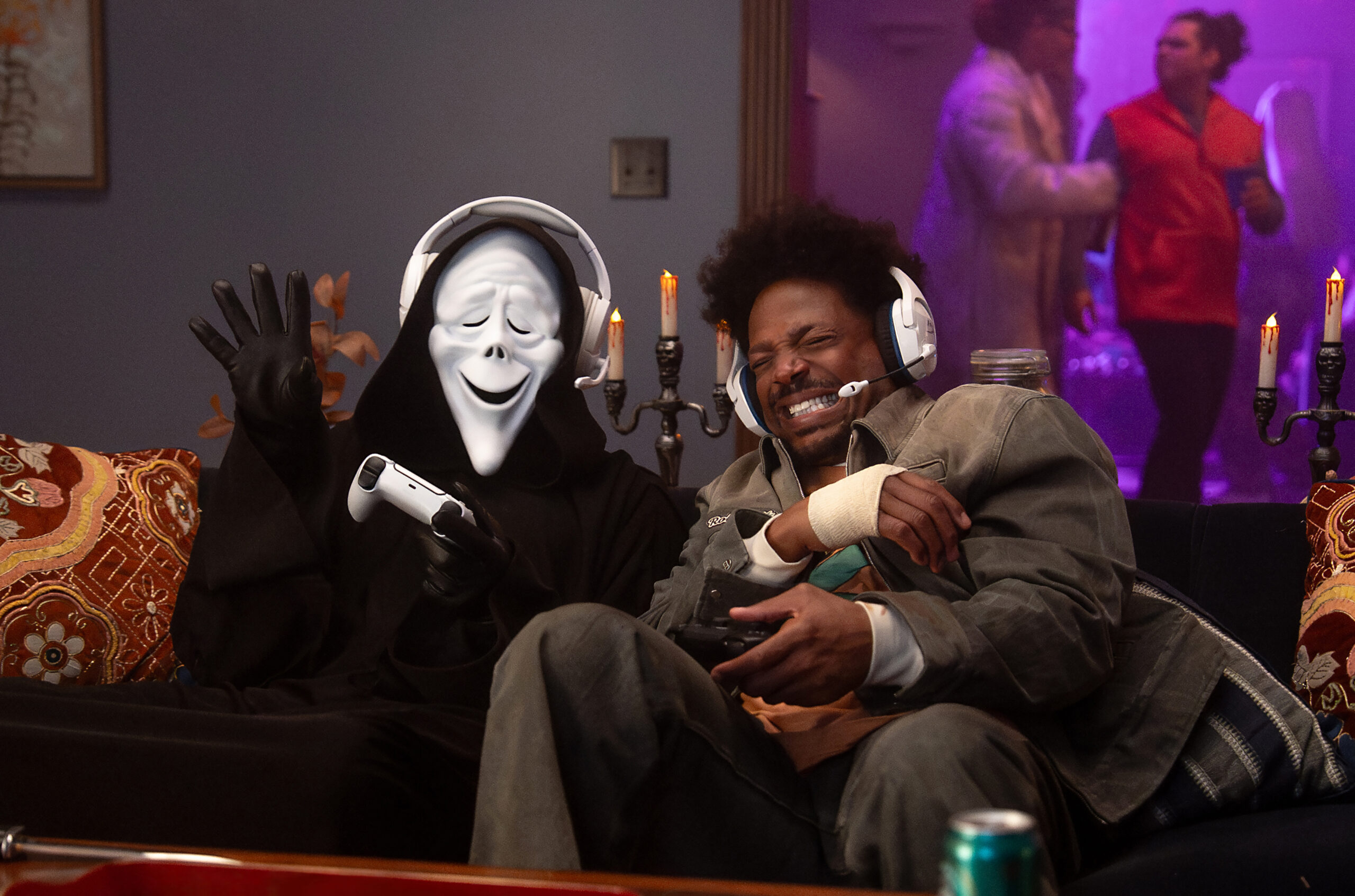
The worst of times should manifest more than just anguish. People need to laugh just as much as they need to think seriously about this moment in time. Even the Scream franchise forgot the meta rock upon which it built its church when the latest foray sacrificed the subtle comedy for serious drama. Scary Movie returned at the perfect moment. It provides the necessary laughs, but it’s not a cure-all.
This isn’t a call for Scary Movie imitators but a return to a mainstream landscape where Killer Klowns from Outer Space sat with The Serpent and the Rainbow, nestled neatly with the latest Nightmare on Elm Street, which took nothing away from The Vanishing.

They Live
Even They Live, John Carpenter’s horror sci-fi satire sandwich, kept its tongue firmly in cheek while discussing serious ideas still relevant in 2026. Yes, a film about aliens taking over the world through subliminal messaging only visible through coded sunglasses is, in fact, a tad silly. Carpenter understood that mainstream horror can’t become so self-important that it never looks itself in the mirror and laughs at that inherent silliness.
The thing is, horror historically excels at poking fun at itself. Most of the Scream franchise, The Cabin in the Woods, or The Blackening show adoration without kowtowing. They recognize tropes and trappings but invert them for an audience already in on the joke, but one that also finds solace in said conventions. This keeps the genre on its toes; once something gets parodied, it’s usually time to evolve. That breeds new ideas and fresh filmmakers, which not only strengthen the genre’s collective voice but also amplify it.
Get Out, as “elevated” as some critics want us to believe it is, is a cathartic, populist scary movie that spoke to an untapped audience rather than speaking down to them. Backrooms is one of the biggest horror hits in years, partially because it’s fine-tuned for modern-day teenagers instead of their parents. Movies like these tell everyone the genre is open for business; open for innovation and, yeah, open for new ways in which people can lovingly poke fun at with a wink and a nudge.
Horror needs dread as much as it needs laughter.
Catharsis is just as important as tension, and pulpy populism has the same merit as more high-brow material. Respectability shouldn’t come at the expense of an experience akin to walking through a haunted house. At a time when joy seems in short supply, horror should look to its past to map out its future, and make things just a tad brighter for audiences.

Backrooms
You must be logged in to post a comment.