Interviews
[Interview] TIFF ’11: ‘The Day’ Stars and Filmmakers Answer: Who is Guy Danella?

Just a week ago TIFF’s Midnight Madness played host to the world premiere of Doug Aarniokoski’s The Day, a new indie action thriller described as an “apocalyptic siege warfare film.”
Aarniokoski, a Robert Rodriguez protege, best know for his second unit director work on Takers, Resident Evil: Extinction and even Once Upon a Time in Mexico, is behind the camera for the flick featuring an all-star cast including Shawn Ashmore (X-Men, Frozen, Mother’s Day, The Ruins), Ashley Bell (The Last Exorcism), Cory Hardrict (Gran Torino, Battle: Los Angeles), Dominic Monaghan (Lord of the Rings, “Lost”) and Shannyn Sossamon (Catacombs, One Missed Call)!
Read inside for our exclusive in depth interview with the cast and crew of WWE Films’ major apocalyptic acquisition.
“In a post-apocalyptic future, an open war against humanity rages. Five survivors wander along rural back-roads, lost, starving and on the run. With dwindling food stocks and ammunition, an attempt at seeking shelter turns into a battleground where they must fight or die.”

The very first credit on the screen for the TIFF Midnight Madnes movie ‘The Day’ is: A Guy A. Danella Production. This begs the question, who the hell is Guy Danella? I actually asked the cast of ‘The Day’ and they were very amused, calling him a “f***ing egomaniac” right in front of him.
Danella himself explained that he was so involved with every aspect of the production, there was no other way to identify the movie. “Is there [such thing as] a method producer?” Danella asked rhetorically. “Does that exist? I think you want to be all in. I’ve been doing this long enough to see movies go off the rails because those people that are there in the beginning let it go to somebody else in production or let it go to somebody else in post. Then they’re frustrated and they want to know why that happened. This is too important, too specific, my promise to Doug [Aarniokoski] and the writer and everybody to deliver something that could and should go to Toronto Midnight Madness. We had lofty ambitions from the beginning. We told the actors this isn’t something for money, this isn’t a gig. This is something that will be a passion and we can really do something special and surprise people. And I don’t have a company name so I didn’t know what else to do.”
‘The Day’, directed by Aarniokoski, portrays 24 hours in the lives of a group of post-apocalyptic survivors. The standout character is sure to be Mary (The Last Exorcism`s Ashley Bell), the kick-ass hunter chick. Bell plays Mary with hardly any dialogue and a ferocity in her eyes.
“Mary is strongly based on survival and revenge, which being a girl in Hollywood was not hard to dig for,” Bell joked. “When I first read the script, I saw that she has a rolled cigarette hanging out of her mouth, she’s clutching a life sized shotgun and I thought yes, I must play this. To be allowed to be that physical in a role and be given the opportunity to play such a complex character is honestly what I love most about acting.”
Bell really got into the action heroism of the role. “I love they started painting on bruises in the beginning of filming and then towards the end, they didn’t have to paint anything anymore,” she said. “I felt so proud of all my bruises. I was like this is a medal of honor. I love them.”
She took one shot to the chin before filming even began. “On our first field trip to the shooting range, that was our first cast bonding trip, Guy took us to the shooting range, I was working with the shotgun and I got a huge bruise on my chin. I was trying to finagle it so it would fit and my chin was on it. It bit back when it kicks and everything and I was so proud of that. I was like yeah, I’m ready.”
Shawn Ashmore plays Adam, a father still mourning the loss of his wife and daughter, who were taken from him while he was scavenging for supplies in a house. “For me one of the most interesting things about Adam is that I got to play a father for the first time,” Ashmore siad. “So for me, that was really where my focus was at. My character Adam is severely disconnected from the situation when the film begins. As the film progresses, he starts to find reasons to continue existing in a way. That was something I really focused on but also the post-apocalyptic nature of this, what I really loved about the script is that it wasn’t completely defined. Whatever your worst fear of that situation is, as an audience member as well, you can plug into that.”
Once the group of survivors finds a house, they fall into a trap and defend themselves for the rest of ‘The Day’ and night. Aarniokoski was able to give the film a fast pace, following the blueprint of Luke Passmore’s script.
“It goes back to the script,” Aarniokoski said. “The words on the page were there and they were truly inspiration. When the story literally steps on the gas, it never lets up. So I felt it was my job to tell the story in a way that was visceral and exciting, and to keep that gas pedal pushed down the entire time. For me it always starts with the script.”
Horror fans will also notice that whenever a survivor or an attacker is killed, the blood that sprays out is computer generated. This allowed Aarniokoski to stage more ambitious sequences without having to worry about soiling costumes or lighting for stage blood.
“It’s not 100% digital blood,” Aarniokoski said. “There was a lot of practical blood involved as well, but when you’re making independent film, you’re not afforded the luxury of time. You don’t have quadruples of wardrobe. You don’t have the type of time it takes to backlight practical blood in order to make it show up at night. There’s things when you watch the movie, they seem very simple in their orchestration but they’re actually very complex to get them right. We just didn’t have that luxury so that was one of the concessions that we made, to add digital blood to the movie so that the cast and the crew could move quickly and get the job done, experience what they needed to experience and not have to worry about `Oh, but you can’t turn to your left because if the blood isn’t backlit properly it’s not going to show up.’ I didn’t want them thinking about that. I wanted them to just be organic.”
Producer Danella also added that some of the digital work was building off of practical blood. “We did a lot of enhancements too, trying to work in as much practical in camera as you can and then if needed you can enhance,” Danella said.
The dirt and grime of the apocalypse was real. The cast got grunged up every morning to look like they’d been roaming the wasteland for months or years. “It was a lot of hands,” Ashmore said. “I remember stuff on the hands. Dirt and grime on your hands, to me that was the one thing that stayed with me. You’d wrap at whatever time, go home and wash your face but I could never get it out from underneath my nails. So I’d go get coffee in the morning and look like a homeless person because I just had grime all over my hands. It was ground in.”
The women in the film are Bell and Shannyn Sossamon. Sossamon was not available in Toronto because she is having a baby, so Bell represented the Hollywood beauties getting dirty.
“Because of the dress I was in, I pretty much got fully painted every day,” Bell said. “So makeup was a lot of fun for me. I got very close to the makeup girls. We had long conversations about life and it was really nice.”
Aside from makeup adding the dirt and bruises, the actors did not have to reach very far to experience the conditions in which their characters live daily. “If you don’t have to pretend that you’re cold, if you don’t have to pretend that you’re exhausted and if you look like crap and feel like crap, that’s exactly what these characters are going through so it sort of makes your job a little easier in a sense,” Ashmore said. “That’s what we did. We went up to Ottowa in October, shot in the elements, embraced all those things that other actors and other filmmakers might have tried to steer clear from and I think it makes it a better film for it.”
Dominic Monaghan plays the leader of the group, Rick, and shares a producer credit on the film. He let most of his costars take the spotlight, but did add a thought about the film’s extreme conditions.
“I think we all had the same reaction Shawn had,” Monaghan said. “It just makes your job a lot easier and allows you to not necessarily have to put your energy towards acting that stuff. You’re just being there. Obviously the best version of acting is if you can just be. Shooting in sequence is really cool because it allowed that tension to build and it allowed that claustrophobic feeling in the house to get more and more as ‘The Day’s went on.”
It seemed like the filmmakers were trying to talk actors out of doing the film. The ones who were tough enough made the cut. “I loved trying to be talked out of it and saying you’re going to have to do most of your own stunts, you’re going to have to lose weight, you’re going to have to go through these conditions,” Bell said. “You’re going to have to be covered in full body mud every single day. I really embrace getting a chance to be that, to do that amount of action and be a ruthless character.”
After the audiences experiences a day with the characters of ‘The Day’, they may be shocked by the final outcome. “It’s not the intention,” Danella said. “That was naturally the story, the same way it was from draft one.”
Aarniokoski thinks reactions could go either way. “The ending to a lot of people will be very shocking,” Aarniokoski said. “I think the ending to a lot of people won’t shock anyone at all. It’s exactly what they would expect. So I guess it depends on your perspective on the character after the 89 minutes that you’ve been watching.”
After playing the film at Midnight Madness, Aarniokoski is getting ready to shoot Nurse 3-D, a thriller for Lionsgate. Asked how he looks back on the disastrous production Animals, he was diplomantic.
“I don’t,” Aarniokoski said. “I’m very thrilled to be working on this Lionsgate project.”
‘The Day’ plays again at Fantastic Fest this month.




Interviews
Paul Tremblay on Fighting AI with Horror in New Novel ‘Dead But Dreaming of Electric Sheep’

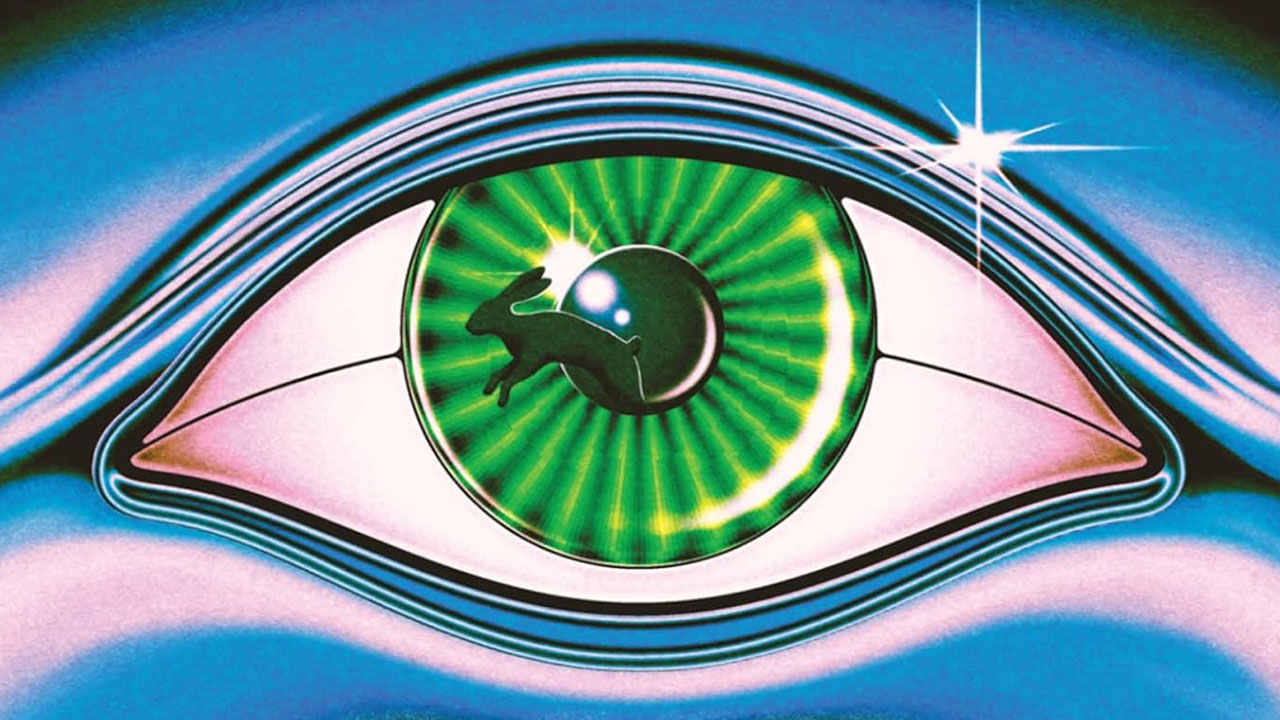
Paul Tremblay didn’t start his writing career believing he’d be battling machines over the sanctity of his job, but like so many writers of his generation, the battle found him. In the years since Large Language Models (LLMs) and neural networks started gaining traction as an advertised shortcut to creativity, Tremblay has been active in lawsuits to prevent the use of his works in training AI models, and he’s found that, with each new project, he has to consider the possibility that some LLM, somewhere, is going to latch on to what he’s creating.
“Now I feel like I’m thinking about, ‘Man, how am I going to write things that would be really hard or impossible for an AI to replicate?’,” Tremblay told me, speaking by Zoom from his home in Massachusetts. “Maybe some of that is ego. I’m sure every writer thinks, ‘Oh, an AI could never write what I write.’ Yes, I’d be lying if I said that wasn’t part of the thought process.”
While that’s something Tremblay might consider with any new work at this point in his career, the Bram Stoker Award-winning author of A Head Full of Ghosts, The Cabin at the End of the World, and many other novels and short stories tackled it in a more direct way with his latest book. Inspired by Philip K. Dick, Harlan Ellison, and the quirky humor of the Coen Brothers, Dead But Dreaming of Electric Sheep is Tremblay’s attempt at a sci-fi-horror mash-up that’s both darkly funny and existentially nightmarish. It’s also, in his own words, a screed against the movement by AI companies to supplant human artists.
“I didn’t want to make it too didactic, but no, I playfully described this book as an anti-AI screed,” he said. “This book, in particular, was driven by anger and frustration, for sure. Not every book is going to be driven that way.“
Despite the emotions that fueled it, Dead But Dreaming of Electric Sheep does not read like a screed. Instead, wielding offbeat humor and tech concepts that feel both lived-in and frighteningly tactile, the book lays out tandem narratives all building to the same conclusion, each of them exploring our relationship to machine learning in a different way. One of these narratives belongs to Julia, a former gaming streamer looking for a new challenge in life, who gets a call from a California tech company with an interesting offer.

Paul Tremblay in documentary series “First Word on Horror”
The company has, it seems, implanted some new technology in a brain-dead middle-aged man which will, in theory, allow them to pilot the man’s body through a rudimentary, still-developing system of controls. Julia, with her gaming background, would be the pilot, in her own way just as much a test subject as the human vegetable she’s controlling.
Julia is a Gen Z streamer with an omnivorous pop culture appetite, inspired by Tremblay’s own adult children, who riffs on The Big Lebowski constantly and calls her strange new meat puppet “Bernie” in reference to Weekend at Bernie’s. Her wide frame of reference, and her interest in art and stories far beyond video games, is in part informed by Tremblay’s own experiences with Gen Z, and in part a response to AI companies who scrape art and culture as a means of consuming it for reference without really experiencing a story.
“I know that one of the arguments that OpenAI and other tech companies are trying to make is like, ‘Hey, you writers, you artists, you take pop culture, you take your influences, and you create something. That’s just the same thing that the bots are doing.’ And it’s just not,” Tremblay said. “I wanted to have Julia have her outlook informed by all this pop culture, and I wanted to make that feel really human as a way to show how inhuman the AI is.”
The other side of the story belongs to “Bernie,” who’s addressed in his point-of-view chapters as “You.” In these chapters, the technology in Bernie’s body starts to flicker images through his seemingly dead brain, delivering half-remembered imagery and perspective in a nod to the “hallucinations” of an AI model groping for understanding it can never reach. These chapters in particular show off Tremblay’s flair for formalist shake-ups, and echo the kind of hyperstimulated writing that Dick and Ellison made so influential.
“I think it was more just the general Philip K. Dick feeling of ‘The world is so strange,'” Tremblay said. “He’s a lot funnier, I think, than maybe a lot of people credit him. That’s definitely what I was thinking of when writing the book.“
Bernie’s chapters embody the strangeness of Dead But Dreaming of Electric Sheep, presenting imagery that’s at times puzzling, at times eerily filmic, and always unnerving. They also mirror Julia’s own journey in fascinating ways as the odd couple – the Gen Z gamer and the middle-aged vegetable – traverse the United States, and the tech in Bernie’s body wakes up to the possibilities of using his flesh for its own purposes. It’s a compelling narrative technique, but it presented some new writing challenges for Tremblay.
“I quickly realized I couldn’t write this book the same way I have in the past,” he said. “By that, I mean all my other novels I had written in the order in which it was presented, even things that are nonlinear, which is most of them. I knew I couldn’t do that in this book. It’s not a spoiler, but hopefully the readers figure out pretty early that the Bernie chapters are a little bit of a preview of the next chapter from Julia, what’s actually happening with Julia. It’s all refracted from him.”

Mary Roach’s Stiff
Dead But Dreaming of Electric Sheep began with a simple image, inspired by Tremblay’s reading of Mary Roach‘s book chronicling the history of our treatment of corpses, Stiff. As he read, Tremblay imagined a body sitting on an airplane, remote-controlled by someone else. At the time, it was a “silly what-if” concept, filed away in his head. Years later, when he became an author suing a tech company to keep AI from scraping his work for ideas, it started to feel frighteningly plausible, taking the “silly what-if” into the territory of a high-concept horror show about what happens when we try to exploit and commodify uniquely human aspects of consciousness.
“It stuck with me,” Tremblay said of that what-if imagery. “And then a few years later, when I was a part of the case suing OpenAI on behalf of writers, that what-if suddenly didn’t seem as silly. The more I learned about how that corporation operates and without really any sort of ethical thought to anything, I was like, ‘Oh, I’m going to play with that. That’s actually happening.”
So, what if someone actually in favor of generative AI picks up Tremblay’s self-described “anti-AI screed?” He hopes that, at the very least, he’s made the ride enjoyable in a distinctly human way that might begin to reshape the conversation.
“I think that was another reason why I wanted to have the humor,” Tremblay said. “If people are reading this book who aren’t on the side of like, ‘Hey, LLMs taking authors’ books is bad,’ maybe if they read something that’s cut with some humor, that maybe they’ll be more easily swayed.”
Dead But Dreaming of Electric Sheep is now in bookstores everywhere.

You must be logged in to post a comment.