Editorials
[BEST & WORST ’11] The 7 Biggest Surprises of the Year!


Oh hey, I didn’t see you there!
2011 was an eventful year – tectonic shifts are moving through the industry in terms of distribution methods, audience demand, and the staggeringly precipitous drop off in quality of studio releases.
When I sat down to write this piece I didn’t want to make a laundry list of complaints (or praise), but rather a collection of stuff – good or bad – that genuinely surprised me at the time. Even if much of it does make sense now.
Also, I’m not sure whether this particular piece is getting published before or after my Best Posters & Worst Trailers lists – but both of those were written beforehand and mention Red State.
Why do I bring this up? Because this editorial contains my final word on Kevin Smith and his Red State shenanigans. Sure, I reserve the right to speak up if there’s something else to contribute to the conversation – but I’m making a vow to wash the taste of Kevin Smith (2011 Edition) out of my mouth. That means that – after this article – I’m giving him a clean slate. I’d like to be pleasantly surprised by him after an unpleasant 2011.
Hit the jump to check it out!

Micah (Best/Worst) | Lonmonster (Best/Worst) | Evan Dickson (Best/Worst) | Lauren Taylor (Best/Worst)
Posters (Best/Worst) | Trailers (Best/Worst) | Performances (Best)
The big horror film this past April was supposed to be Scream 4. It wasn’t. In fact, the public displayed a markedly decreased interest in the continuation of the franchise (either because of Scream 3 or the simple passage of time, take your pick). What the public decided upon instead was Insidious. A film that wasn’t really on the world’s radar in any big way prior to its release wound up taking in $54 Million domestic ($97 Million worldwide) at the box office. Compare that with Scream 4’s disappointing domestic haul of $38 Million ($97 Million worldwide) and you might ask what the big deal is. After all, their worldwide cumes are nearly identical. Of course, the $1.5 Million budget for Insidious is roughly 1/26th of the amount spent on Scream 4. And the budgets allocated to their P&A campaigns were of disparate amounts as well (though not as dramatic of a divide as their production costs). What Insidious proved, however unlikely or temporarily, is that audiences on occasion will choose something small and original over sequelized behemoths. In this day and age, that’s a nice surprise to have.

The Thing – $16,928,670*
Fright Night – $18,302,607*
Straw Dogs – $10,324,441*
*domestic box office
First of all, I’m calling The Thing a remake even though technically it’s a prequel. But it’s a prequel with the same title, an identical visual aesthetic and no new ideas. The reason it exists is for the same business reasons remakes exist. At the core of its CGI heart, spiritually, the film is a remake and you know it.
Why did they fail? I never expected Straw Dogs to knock it out of the park. The subject matter is wayyyyyy too touchy and its leads, while all appealing actors, have yet to be proven box office draws.
But I honestly thought The Thing and especially Fright Night would do better. Even if Colin Farrell is more of a character actor than movie star these days it had a great cast, decent marketing and it’s about vampires (the cash cow with golden udders). The Thing looked like it was positioned to sucker in a great October opening weekend at the very least.
In hindsight the two-pronged explanation seems relatively simple.
None of these movies were all that great. Maybe horror audiences are getting better at parsing through marketing and ascertaining an approximation of the actual quality level of the film.
…and…
As much as you and I may love the original films, none of them were really hits. Even though they’re all classics with rich lives on the video shelves, there’s not really a giant mainstream awareness of them. Especially among teenagers. This lack of awareness hurts on two fronts. You don’t get the “built-in-audience” factor that remakes bank on, and the few people who do make it to the theater without being in love with the originals are confronted with films that spend much of their running time paying attention to a different audience. Case in point, the ending of The Thing. As a fan of the original it was one of the few moments I appreciated. But if you’re some kid who walked in blind? What the hell are you supposed to do with that?

Spoiler! If I told you that there was a film with an ensemble cast that took place in a mental hospital and asked you to guess the twist ending – what would your first guess be?
That’s right! That’s exactly what it is. I’m not sure what John Carpenter saw in Michael and Shawn Rasmussen’s script, other than something he could shoot on the cheap. The shame is that Carpenter actually kind of brings it here as a director – the film is visually and editorially sound. Unfortunately it’s saddled with a script straight from the 1992 “consider” pile.

I’m not sure what went wrong in the minds of horror fans on February 25th, 2011. But it was more than a little surprising to see so few of you turn out for Drive Angry. Nic Cage having intercourse mid gunfight, William Fichtner in general, the devil, cars, blood, car chases, Amber Heard… need I go on?
It’s not a classic, but this is one of those original movies that you constantly whine about not getting, only to routinely reject.

It can be such a pain going to see short films. You want to do it out of an inherent duty to keep your eye out for special new talent, but you get burned again and again. Shorts are the great canvas for people who aren’t ready to make films to announce to the world just how unprepared they are. I saw at least 50 or 60 shorts this year and I think I liked maybe 5 of them.
Then there’s Cost Of Living. It’s a load of fun and it’s also writer/director BenDavid Grabinski’s announcement that he’s ready for the reigns on a feature. Filmed in a tunnel system familiar to any fan of They Live, this short packs more character, humor, action and gore into its 8 minute running time than many of the features I had to sit through this year. Particularly inspired is the computerized voice of the automated security system – a device that simultaneously ups the tension and the laughs.
Look for Cost Of Living to make its online debut sometime next year.

September 9th, 2011.
Despite the fact that it should have never been made at all, Creature opened on a whopping 1,507 screens on this date. Regardless of the realities of the situation, the only way I can imagine this decision playing out is in a dank room with flickering lights and gargantuan quantities of cocaine.
I saw the film the night before its release in a room filled with the most odious moviegoers I’ve ever had to endure. Cell phones constantly on, the guy behind me drinking a 40, the entire audience refusing to shut the f*ck up. Normally I call people out on this behavior but it was a toss-up for me since their bored commentary about equaled the movie in entertainment value. I came to the conclusion that if the entire theater went up in flames, taking the audience and a print of the film with it, it would totally be worth the sacrifice of my own life.
Of course, reality rewarded them with the 2nd lowest wide release per-screen average in the history of cinema – but I’m still really curious as to how they arrived at this decision. Shortly after the film’s release, director Fred Andrews called critics who didn’t like the film (ie everyone except for the LA Times) “bottom feeders”. This being despite his inept audacity to have his entire climactic battle take place off camera.
So from a “bottom feeder” to Fred Andrews – how’s the view from the top buddy?

After lying to legitimate bidders at the Sundance Film festival about his intentions to auction off the rights to his middling bible belt thriller, Smith smugly strolled out in his trademark oversize hockey jersey and ‘bought’ the rights to the film himself for $20. It was a moment choreographed to come across as bold and triumphant. Well, he misread the room – many of whom had actually been considering buying Red State. Instead it spoke volumes about Smith’s own disconnect with growth, valid criticism. More loudly still, it spoke about Smith’s increasing need to insulate himself.
Smith has been at odds with critics since Cop Out (and you could argue that he’s been at odds with quality filmmaking since Jay And Silent Bob Strike Back) when he suggested they have to pay to see his films like everyone else. It was also around this time that he curiously defended Cop Out by implying that the title of the film alone should clue us in to the amount of effort he put into it. In which case it makes no sense for him to get mad about people hating it, but very little about Smith makes sense these days unless you view it through the lens of impotent rage.
So to see him four-walling his Red State and taking it on the road at premium prices (*some markets had tickets below $80, some markets had ticket above $80) along with a Q&A segment almost makes sense in terms of his overall trajectory. He also charged $20 dollars to see it at the New Beverly, a venue that almost always offers double features along with Q&A for $7. The iTunes rental started off at $9.99, which is a good deal more than most premium rentals.
That’s not surprising. What’s surprising is how ugly it got.
Look, he knows how to get his fanbase to shell out inordinate sums of money. There’s always been a ceiling of $30 Million or so for his films DBO and it’s a smart move on his part to recognize that he’s trapped under a glass ceiling. But he does have a large number of fans under that ceiling with him that worship the ground he walks on and will pay top dollar for anything he does. It’s a cynical move on his part to exploit that, but it’s also smart. I feel bad for his fans, but there’s only so many times you can try and intervene in an abusive relationship before you realize you’re just wasting everyone’s time.
But it gets uglier beyond that – perhaps emboldened by his perception of the success of a new business strategy that allows him to keep his friends in his pocket while alienating his ‘enemies’ (anyone he perceives as having done him wrong – which after 20 years in the business is a long, long list) – he has begun dismantling any and all remaining goodwill towards him. He has a security blanket in the cadre of fans who suck up to him on twitter, forwarding him links of articles they feel have wronged their master in an attempt to solicit approval for themselves and ire towards anyone who refuses to validate their aesthetic arbiter (in some cases their lifestyle arbiter).
In some ways he’s becoming the geek Howard Hughes, withdrawing into his own world. Instead of germs, he’s battling criticism. It doesn’t matter whether it’s overt or implied. In what seems like a subconscious act of grappling with his insecurities, rather than demanding accolades for himself, he’s decided to throw his actors into the firing line instead (something I suspect they want no part of). After all, the series of screenings at the New Beverly was an “Award Qualifying” run for his talent… not for him.
A few weeks ago, the Independent Spirit Awards failed to recognize Red State in a manner that lived up to Smith’s expectations.
His response? “How the fuck did the @SpiritAwards NOT nominate Michael Parks? Nor John Goodman? Nor Melissa Leo? Fuck your idiotic organization.”
In a world defined by our actions, he’s that kind of guy now. It’s enough to retroactively spoil what little enjoyment I still get out of his early films.
In order to grow as a filmmaker you need to learn from your mistakes. Which is perhaps why Smith isn’t showing any growth. Sure, he self-deprecatingly admonishes himself and his films, but I don’t think he actually internalizes what he’s saying. It’s just fodder for the Q&A circuit, fodder for Kevin & Bean, and fodder for the people who he knows will buy what he’s selling.
I hope he gets past this, I hope this is a phase. But I’m beginning to think this is how he’s been all along.



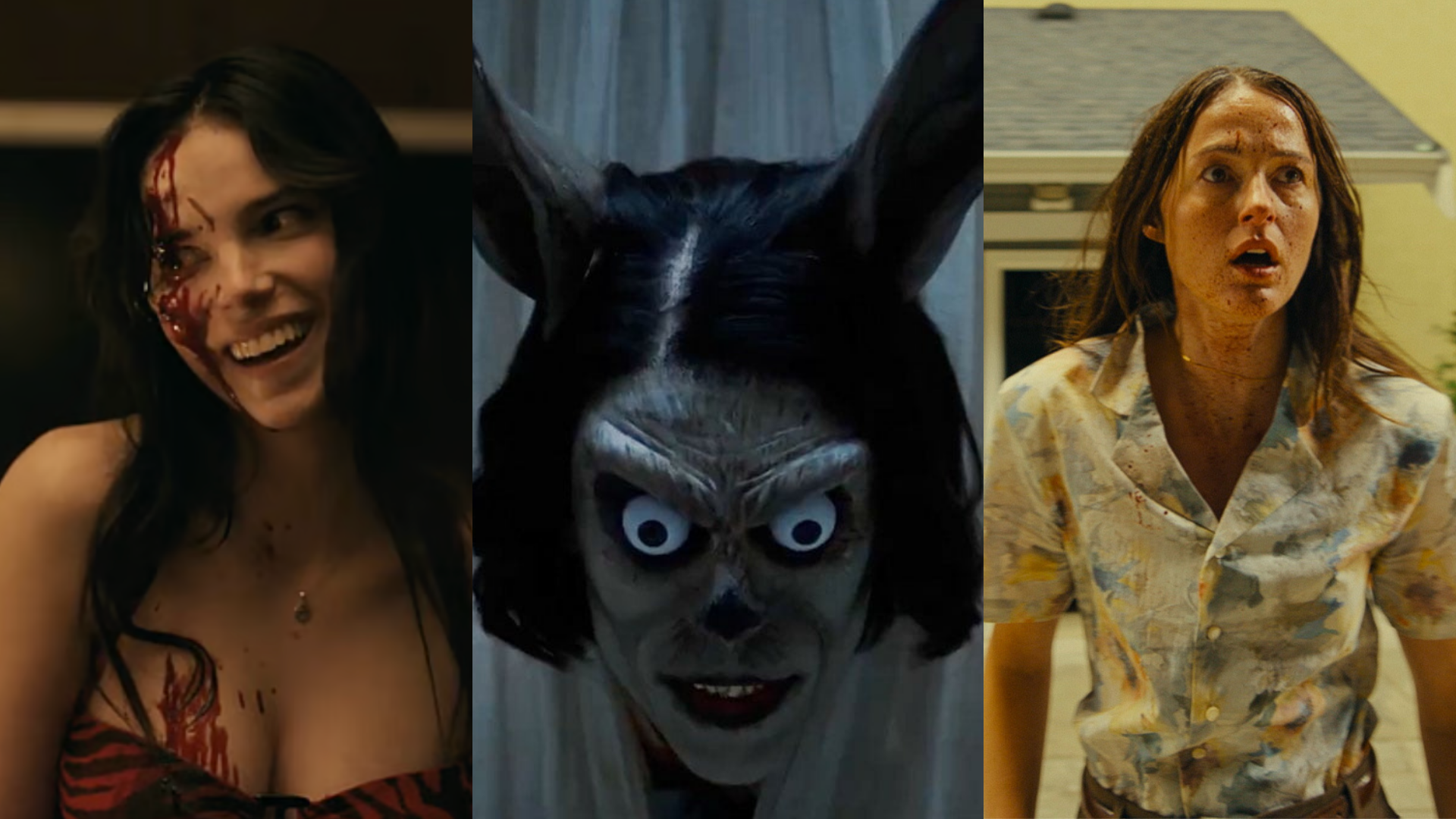
We’re now officially in the back half of 2026 now that July is here, but what a year it’s been for horror so far. The sequels and reboots are still holding strong at the box office with films like Scream 7 and Scary Movie, but it’s also been a year where new voices are shattering records in unexpected ways.
Markiplier eschewed conventional production and distribution channels with his feature adaptation of Iron Lung, for example. We’re also still in the midst of Backrooms and Obsession-mania, with the former back in theaters with bonus footage and the latter extending its box office reign. Liminal horror has exploded, and low-budget indie horror is seeing just as much, and sometimes even more, success as big studio-backed fare.
All of which to say that 2026 has been a hell of a year so far for the genre, and it’s only getting warmed up. Still on the way are Evil Dead Burn, Insidious: Out of the Further, Resident Evil, Clayface, Whalefall, and Werwulf, just to name a few.
Also catch up with the Best Horror Books and Best Horror Games of the year so far.
Here are the ten best horror movies of the year (so far).
10) Chime

Horror master Kiyoshi Kurosawa is back with one of his most haunting yet, though one that’d likely be higher on this list if it were more accessible. The 45-minute feature was initially produced and distributed as an NFT before receiving a theatrical run earlier this year, with no plans to distribute digitally or on home media. It spins a somewhat cryptic tale, introducing a culinary teacher, Takuji Matsuoka (Mutsuo Yoshioka, Never After Dark), whose classroom becomes disrupted by a strange sound that leads to violence. It’s a quiet but haunting unraveling, one that leaves no aspect of Matsuoka’s life untouched, in true Kiyoshi Kurosawa style. That it defies any easy explanation also ensures Chime embeds itself under your skin.
9) Send Help

Sam Raimi’s splatstick return to form is a delightfully deranged two-hander that doubles as infectious catharsis for anyone who’s ever had a bad boss. Rachel McAdams (Doctor Strange) and Dylan O’Brien (The Maze Runner) face off when their characters are shipwrecked on an island, prompting a bid for survival in more ways than one. While O’Brien often matches her, It’s McAdams who shines as she deftly handles everything that Raimi, working from a script by Damian Shannon & Mark Swift (Freddy vs. Jason), throws at her. Send Help is full of vibrant personality, packed with all of Raimi’s signatures, making for one of the most entertaining films of the year.
8) Mārama

New Zealand filmmaker Taratoa Stappard’s gothic tale begins in familiar fashion, with Mary Stevens (Ariāna Osborne) arriving in Yorkshire upon invitation to learn more about her parents, only to find the remote manor haunted. Just when Stappard’s period horror story feels doomed to succumb to familiar gothic trappings and jump scares, though, its true horror emerges. The more Mary uncovers about her heritage and her Māori culture, the clearer it becomes that this grim home is built on violence and exploitation. Stappard’s vision comes into its own when it leaves behind its gothic influences and embraces its Māori identity; few scenes are as powerful as when Osborne’s Mary performs a haka in response to her vile oppressors, heralding in a righteous bloodbath.
7) Touch Me

Writer/Director Addison Heimann draws from retro Japanese horror, exploitation cinema, and perhaps even hentai for his campy, psychosexual sophomore feature. A toxic friendship plagued by trauma, codependency, and addiction gets tested to the extreme when Brian (Lou Taylor Pucci), a hip-hop-loving, tracksuit-sporting alien, gets between them. Olivia Taylor Dudley and Jordan Gavaris have an easy rapport and play off each other well as directionless, depressed Millennial besties prone to ignoring their problems until they become insurmountable. But it’s Pucci’s inspired, childlike take on the chicken nugget-loving extraterrestrial with tentacled secrets of his own that steals the show. Heimann has a lot on his mind with his sophomore feature and neatly condenses it all into a quirky, eccentric psychosexual camp odyssey that leans heavily into humor.
6) Backrooms

Director Kane Parsons translates the vast liminal labyrinth of his web series to the big screen in his feature debut, one that instills existential dread with its atmospheric horror and narrative. The ‘ 90s-set horror movie introduces a protagonist with a serious chip on his shoulder over life’s many disappointments, who then discovers his furniture store harbors a hidden door that leads to an endless labyrinth. It’s not just the incredible production design that instills a disorienting sense of doom and terror, but the lead characters’ palpable and profound sense of loneliness and isolation. Parsons exudes impressive confidence and control as he methodically entrusts his quiet worldbuilding and talented leads to carry the dramatic weight. While Backrooms does deflate by the film’s cryptic, cliffhanger-y end, it’s arguably the most effective and scariest yet at capturing the uncanny valley of generative AI.
5) Leviticus

Writer/Director Adrian Chiarella uses an It Follows-like supernatural entity that relentlessly stalks its prey as a launchpad to immerse audiences in the horror of constantly living in fear for simply existing. A conversion therapy ritual among a deeply conservative community plunges a pair of erstwhile lovers into a nightmarish bid for survival when it summons a force that takes the shape of those whom the afflicted desires most. Chiarella refines the horror mechanics and metaphor with much sharper precision, ensuring that the scares and emotional gravity of the young couple’s terrifying predicament reach their intended impact. It’s the central layered performances by Joe Bird (Talk to Me) and Stacy Clausen (Thrash) that clinch emotional investment in their heartbreaking plight, ensuring that the social horror cuts deep.
4) Redux Redux

The McManus Brothers, writer/director duo Matthew and Kevin McManus (The Block Island Sound), dials up the intensity of a classic revenge story by setting it within a multiverse, where Irene Kelly (Michaela McManus) seeks to snuff out every single iteration of her daughter’s murderer, Neville (Jeremy Holm). The more she stalks and slays every world’s Neville, the more she risks losing her humanity entirely. Through a narrative foil in Mia (Stella Marcus), Redux Redux smartly bypasses repetition as it explores the moral complexities and vulnerabilities of Irene’s extremely violent quest. Holm becomes utterly terrifying in the climax, ensuring that no matter whether Irene loses herself to vengeance for good or not, it’s justified if it means ridding the world of this sick maniac.
3) 28 Years Later: The Bone Temple

Director Nia DaCosta takes the reins in the second entry in writer Alex Garland and original director Danny Boyle’s trilogy, picking up from the previous conclusion that saw Spike (Alfie Williams) fleeing from the infected straight into the welcoming arms of Sir Jimmy Crystal (Sinners’ Jack O’Connell). From here, DaCosta presents a stark contrast between humanity’s best and worst. The former sees the tender studies of Dr. Kelson (Ralph Fiennes) make poignant strides toward humankind’s future, while the latter unleashes more pain and bloodshed courtesy of the Jimmies. The dual paths of light and dark collide in one epic conclusion, an inspired confrontation between good and evil on a stunning set piece of heavy metal insanity. Yet it’s DaCosta’s handling of both extremes that impresses most, teeing up one epic conclusion to this trilogy.
2) Obsession

Sketch comedian turned horror filmmaker Curry Barker (Milk & Serial) wrings blood-curdling terror from a classic Monkey’s Paw wish fulfillment scenario in a way that no one could have ever anticipated. To say that it’s taken the box office by storm would be a massive understatement; Obsession is the top horror movie of the year in terms of gross. It’s not hard to see why, either. While Monkey’s Paw scenarios often yield predictable outcomes, and this outcome is practically telegraphed from the start, Barker manages to surprise with the journey itself. And it’s one insane journey paved with blood-soaked violence and no shortage of nightmare fuel. What truly sets it apart, though, is leads Michael Johnston and Inde Navarrette as the central pair undone by one vicious wish. Expect to see a lot more from breakout Navarette.
1) Hokum

A surly, traumatized writer must break free from his self-imposed shackles of guilt when confronted by a wicked witch haunting a quaint Irish inn in the latest by writer/director Damian McCarthy (Oddity). Adam Scott’s Ohm makes for an atypical but rewarding protagonist, and his complicated emotional journey gives way to a deeply moving story of a man so thoroughly broken by personal trauma that he constantly dwells in darkness. In true McCarthy style, expect the creepy as hell witch to dole out some supernatural retribution for crimes committed, but never in the way you’d expect. The filmmaker has a way of making whimsy pure nightmare fuel; Hokum distorts a kids’ show into eerie, uncanny valley-induced terror in its torment of Ohm. Channeling Stephen King, this creeper plays like a traditional campfire tale in mood and style, infusing genuine scares with a sense of magic and heart.
You must be logged in to post a comment.