Editorials
‘Diablo III’ Review: Demons, Dungeons And Daddy Issues


It took over a decade to get here, but the undisputed king of the dungeon crawlers is back, and oh my fuck does it taste good. Being a fan of this game is like being in an abusive relationship. You’ll invest your time, heart, and soul into this game–possibly ruining your social life in the process–and in return you’ll get one of the best gaming experiences available, peppered with the occasional Error 37 and a mean case of carpel tunnel. Head past the break for my tale of delicious terror.
Odds are many of you never played the original Diablo or its sequel, since both released back in that glorious time when the Power Rangers weren’t ninja samurai dinosaur hunters, and long before Michael Bay and George Lucas had proceeded to rape our childhood. Diablo is all about kicking demonic ass with your friends, all with the hopes that when that ugly bastard finally falls he’ll drop something valuable.
In the decade after its release, I’ve returned to Diablo II at least once a year. I’ll go a year or so without playing it, then I’ll go at it hardcore for a few months, then take a break until the shakes and sweats remind me I need to get my Diablo fix.
It’s still too early to tell if Diablo III will have the same staying power its predecessor did, but it certainly seems as if it will. The highly addictive gameplay, loot-grinding and incredible co-op are all better than ever. On top of that, everything has been streamlined to make it more user-friendly and easier to play for hours on end.

Diablo III is a stunningly beautiful game. Its beautifully crafted environments and the twisted creatures that inhabit them are gorgeous. The hand-painted textures are easy on the eyes, and thankfully, you don’t need a top of the line computer to fully enjoy them.
If incredible art doesn’t tickle your delicate eyeballs the same way it does mine, then perhaps the music will. The sound a demon makes as you plunge your sword into its neck is satisfyingly squishy, almost as satisfying as the sound they make when you electrify, burn, freeze, or poison their scaly asses. One of the great things about the series, other than the plethora of ways you can beat down the hordes of monsters that are thrown at you, is how different each of the character classes are from each other. You have two familiar faces: the Barbarian, the tank, who can mow down pretty much everything that’s unfortunate enough to get in his way, and on the opposite end of the spectrum, the Wizard, a glass cannon who wields devastating power but limited defense.
In Diablo II there’s a good chance you’d find me in the shoes of the Necromancer, casting Curses from behind my army of skeletons, or zipping through the battlefield at lightning speed as the Assassin. Both have been replaced by spiritual successors of sorts, with the Witch Doctor and the Demon Hunter. The former can summon a smaller army of Voodoo inspired creatures and the latter is like a mix of the Assassin and the Amazon from Diablo II. She wields traps and can dual-wield crossbows. The final class is the Monk, who replaces the Paladin and offers a lighter side to an otherwise dark cast of characters.
This series has never excelled in the story department. Essentially, what you need to know is there are demons and there are angels. They’re fighting, and unfortunately, humanity is stuck in the middle. The standout character is Leah–voiced by the incredible Jennifer Hale, who also voices the female Shepard in Mass Effect 3– a woman who’s left with the burden of figuring out this whole prophecy thing before time runs out and humanity is eradicated by the seemingly endless legions of hell.
The skill system has seen the biggest changes, as you no longer have to grind through enemies so you can level up your character to try out their skills. It doesn’t take countless hours to craft the perfect warrior–now you can quickly choose your skills and bonuses and change them on the fly. The Runes have been changed to alter skills, rather than equipment. They are unlocked every couple levels, and each skill has a unique set that alters its function and even the way it looks when used. For example, the Summon Zombie Dogs skill’s original effect is to summon three dogs to fight for you. If that’s not quite awesome enough for you, you can use a Rune to make the dogs rabid, which means they spread poison between the enemies they attack, or even set them on fire. Now if flaming zombie dogs isn’t awesome enough for you, you’re officially dead inside.

Despite a rocky launch and some absent features like PvP and the real-money Auction House, there’s still plenty of content here to enjoy. Having to be online to play the game, even if you’re playing alone is unfortunate as it can result in lag in your single-player game. The campaign is meaty enough, and offers plenty of incentives to return to it a second (or third, fourth, fifth) time. The environments aren’t entirely randomly generated like they were in Diablo II–rather, their borders remain fixed while the things that go on inside them can change every time you play the game. This means you might run through an area and see nothing the first time, then your second time through there could be a short side quest you need to complete or dungeon that needs exploring. Fear not, that level of unpredictability is still here, it’s just not quite as obvious.
Many games have tried to recreate Diablo’s magic. It’s a delicate balance of finely tuned gameplay, loot, and dungeon crawling that makes this series so special. Other games have come close to crafting something very similar, like Torchlight, while games like Borderlands have taken some of the best things about the series and woven them into other genres. Despite this, Diablo III remains untouched. Its reign as the premier dungeon crawler has been a long one, and it doesn’t look to be losing its crown anytime soon.
The Final Word: The wait was long, but it was worth it. Diablo III is a stunningly beautiful game that will please longtime fans and newcomers alike.

This review is based on a retail copy of Diablo III, which was provided by the publisher.
Toss Adam an email, or follow him on Twitter and Bloody Disgusting



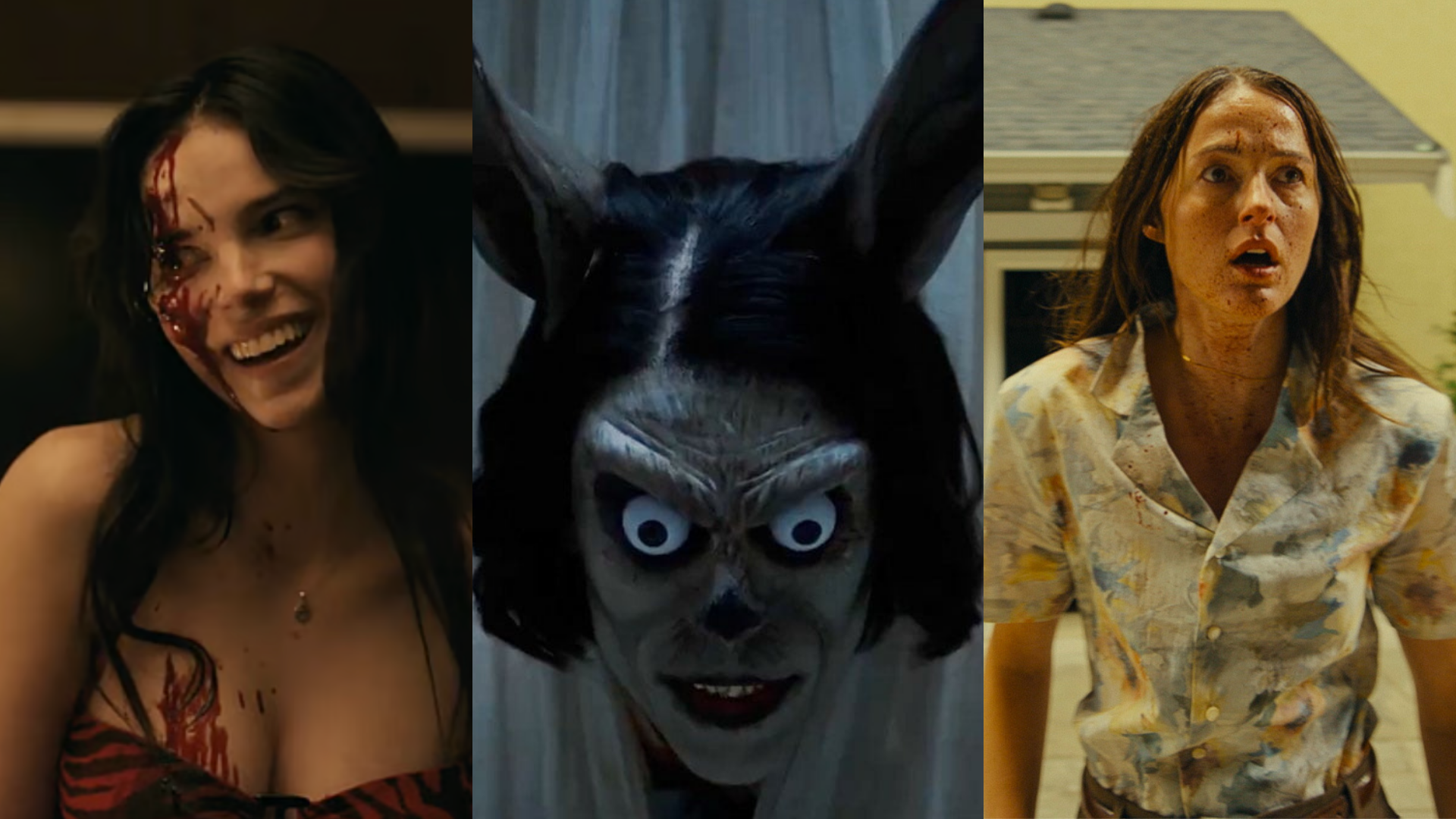
We’re now officially in the back half of 2026 now that July is here, but what a year it’s been for horror so far. The sequels and reboots are still holding strong at the box office with films like Scream 7 and Scary Movie, but it’s also been a year where new voices are shattering records in unexpected ways.
Markiplier eschewed conventional production and distribution channels with his feature adaptation of Iron Lung, for example. We’re also still in the midst of Backrooms and Obsession-mania, with the former back in theaters with bonus footage and the latter extending its box office reign. Liminal horror has exploded, and low-budget indie horror is seeing just as much, and sometimes even more, success as big studio-backed fare.
All of which to say that 2026 has been a hell of a year so far for the genre, and it’s only getting warmed up. Still on the way are Evil Dead Burn, Insidious: Out of the Further, Resident Evil, Clayface, Whalefall, and Werwulf, just to name a few.
Also catch up with the Best Horror Books and Best Horror Games of the year so far.
Here are the ten best horror movies of the year (so far).
10) Chime

Horror master Kiyoshi Kurosawa is back with one of his most haunting yet, though one that’d likely be higher on this list if it were more accessible. The 45-minute feature was initially produced and distributed as an NFT before receiving a theatrical run earlier this year, with no plans to distribute digitally or on home media. It spins a somewhat cryptic tale, introducing a culinary teacher, Takuji Matsuoka (Mutsuo Yoshioka, Never After Dark), whose classroom becomes disrupted by a strange sound that leads to violence. It’s a quiet but haunting unraveling, one that leaves no aspect of Matsuoka’s life untouched, in true Kiyoshi Kurosawa style. That it defies any easy explanation also ensures Chime embeds itself under your skin.
9) Send Help

Sam Raimi’s splatstick return to form is a delightfully deranged two-hander that doubles as infectious catharsis for anyone who’s ever had a bad boss. Rachel McAdams (Doctor Strange) and Dylan O’Brien (The Maze Runner) face off when their characters are shipwrecked on an island, prompting a bid for survival in more ways than one. While O’Brien often matches her, It’s McAdams who shines as she deftly handles everything that Raimi, working from a script by Damian Shannon & Mark Swift (Freddy vs. Jason), throws at her. Send Help is full of vibrant personality, packed with all of Raimi’s signatures, making for one of the most entertaining films of the year.
8) Mārama

New Zealand filmmaker Taratoa Stappard’s gothic tale begins in familiar fashion, with Mary Stevens (Ariāna Osborne) arriving in Yorkshire upon invitation to learn more about her parents, only to find the remote manor haunted. Just when Stappard’s period horror story feels doomed to succumb to familiar gothic trappings and jump scares, though, its true horror emerges. The more Mary uncovers about her heritage and her Māori culture, the clearer it becomes that this grim home is built on violence and exploitation. Stappard’s vision comes into its own when it leaves behind its gothic influences and embraces its Māori identity; few scenes are as powerful as when Osborne’s Mary performs a haka in response to her vile oppressors, heralding in a righteous bloodbath.
7) Touch Me

Writer/Director Addison Heimann draws from retro Japanese horror, exploitation cinema, and perhaps even hentai for his campy, psychosexual sophomore feature. A toxic friendship plagued by trauma, codependency, and addiction gets tested to the extreme when Brian (Lou Taylor Pucci), a hip-hop-loving, tracksuit-sporting alien, gets between them. Olivia Taylor Dudley and Jordan Gavaris have an easy rapport and play off each other well as directionless, depressed Millennial besties prone to ignoring their problems until they become insurmountable. But it’s Pucci’s inspired, childlike take on the chicken nugget-loving extraterrestrial with tentacled secrets of his own that steals the show. Heimann has a lot on his mind with his sophomore feature and neatly condenses it all into a quirky, eccentric psychosexual camp odyssey that leans heavily into humor.
6) Backrooms

Director Kane Parsons translates the vast liminal labyrinth of his web series to the big screen in his feature debut, one that instills existential dread with its atmospheric horror and narrative. The ‘ 90s-set horror movie introduces a protagonist with a serious chip on his shoulder over life’s many disappointments, who then discovers his furniture store harbors a hidden door that leads to an endless labyrinth. It’s not just the incredible production design that instills a disorienting sense of doom and terror, but the lead characters’ palpable and profound sense of loneliness and isolation. Parsons exudes impressive confidence and control as he methodically entrusts his quiet worldbuilding and talented leads to carry the dramatic weight. While Backrooms does deflate by the film’s cryptic, cliffhanger-y end, it’s arguably the most effective and scariest yet at capturing the uncanny valley of generative AI.
5) Leviticus

Writer/Director Adrian Chiarella uses an It Follows-like supernatural entity that relentlessly stalks its prey as a launchpad to immerse audiences in the horror of constantly living in fear for simply existing. A conversion therapy ritual among a deeply conservative community plunges a pair of erstwhile lovers into a nightmarish bid for survival when it summons a force that takes the shape of those whom the afflicted desires most. Chiarella refines the horror mechanics and metaphor with much sharper precision, ensuring that the scares and emotional gravity of the young couple’s terrifying predicament reach their intended impact. It’s the central layered performances by Joe Bird (Talk to Me) and Stacy Clausen (Thrash) that clinch emotional investment in their heartbreaking plight, ensuring that the social horror cuts deep.
4) Redux Redux

The McManus Brothers, writer/director duo Matthew and Kevin McManus (The Block Island Sound), dials up the intensity of a classic revenge story by setting it within a multiverse, where Irene Kelly (Michaela McManus) seeks to snuff out every single iteration of her daughter’s murderer, Neville (Jeremy Holm). The more she stalks and slays every world’s Neville, the more she risks losing her humanity entirely. Through a narrative foil in Mia (Stella Marcus), Redux Redux smartly bypasses repetition as it explores the moral complexities and vulnerabilities of Irene’s extremely violent quest. Holm becomes utterly terrifying in the climax, ensuring that no matter whether Irene loses herself to vengeance for good or not, it’s justified if it means ridding the world of this sick maniac.
3) 28 Years Later: The Bone Temple

Director Nia DaCosta takes the reins in the second entry in writer Alex Garland and original director Danny Boyle’s trilogy, picking up from the previous conclusion that saw Spike (Alfie Williams) fleeing from the infected straight into the welcoming arms of Sir Jimmy Crystal (Sinners’ Jack O’Connell). From here, DaCosta presents a stark contrast between humanity’s best and worst. The former sees the tender studies of Dr. Kelson (Ralph Fiennes) make poignant strides toward humankind’s future, while the latter unleashes more pain and bloodshed courtesy of the Jimmies. The dual paths of light and dark collide in one epic conclusion, an inspired confrontation between good and evil on a stunning set piece of heavy metal insanity. Yet it’s DaCosta’s handling of both extremes that impresses most, teeing up one epic conclusion to this trilogy.
2) Obsession

Sketch comedian turned horror filmmaker Curry Barker (Milk & Serial) wrings blood-curdling terror from a classic Monkey’s Paw wish fulfillment scenario in a way that no one could have ever anticipated. To say that it’s taken the box office by storm would be a massive understatement; Obsession is the top horror movie of the year in terms of gross. It’s not hard to see why, either. While Monkey’s Paw scenarios often yield predictable outcomes, and this outcome is practically telegraphed from the start, Barker manages to surprise with the journey itself. And it’s one insane journey paved with blood-soaked violence and no shortage of nightmare fuel. What truly sets it apart, though, is leads Michael Johnston and Inde Navarrette as the central pair undone by one vicious wish. Expect to see a lot more from breakout Navarette.
1) Hokum

A surly, traumatized writer must break free from his self-imposed shackles of guilt when confronted by a wicked witch haunting a quaint Irish inn in the latest by writer/director Damian McCarthy (Oddity). Adam Scott’s Ohm makes for an atypical but rewarding protagonist, and his complicated emotional journey gives way to a deeply moving story of a man so thoroughly broken by personal trauma that he constantly dwells in darkness. In true McCarthy style, expect the creepy as hell witch to dole out some supernatural retribution for crimes committed, but never in the way you’d expect. The filmmaker has a way of making whimsy pure nightmare fuel; Hokum distorts a kids’ show into eerie, uncanny valley-induced terror in its torment of Ohm. Channeling Stephen King, this creeper plays like a traditional campfire tale in mood and style, infusing genuine scares with a sense of magic and heart.
You must be logged in to post a comment.