Editorials
[Good Scenes In Bad Movies] ‘The Beacon’ Edition!

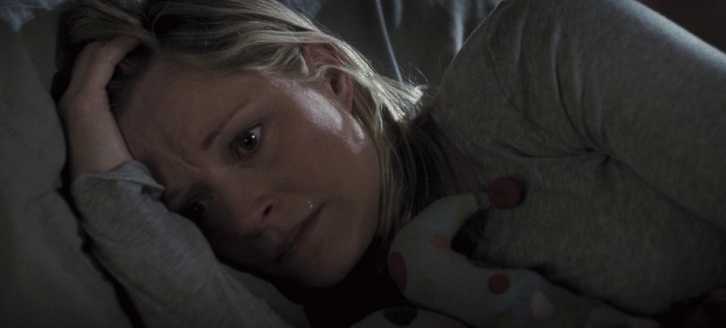
I’ve seen The Beacon. It was one of the very first five or so films I reviewed for this site! Oh, the days (of only a year or so ago). Anyway, it’s terrible – but I had a lot of fun with it (especially the makeup at the ending). But we each find our own ways through terrible movies, clinging on to different scenes that, however so briefly, part the clouds. And that’s precisely the point The Wolfman (@TheWolfmanCometh – on the boards) aims to illustrate here in his column!
We’re going to, on occasion, start examining decent scenes in otherwise bad movies. And we hope you’ll come along for the ride! Head inside for his take on The Beacon!

I think one term you hear more in the horror genre than you hear in most other genres would be “It’s so bad that it’s good.” Essentially, this means someone is saying that a movie tried to be scary/suspenseful/thrilling and had such a bad cast, writing, direction, or effects that it’s entertaining how badly everything falls apart. I like to think I have a pretty high standard for what horror films fall into this “so bad it’s good” category, so much so that I don’t even think Troll 2 is all that entertaining in that respect (give me Birdemic: Shock and Terror any day of the week!). To me, that “so bad it’s good” is typically just a way of telling people that a movie is a guilty pleasure of yours, and you might actually think it’s good. Also, the whole idea of bad vs. good is obviously incredibly subjective, which I think is something that has been making these articles challenging. For example, I don’t think Rob Zombie’s Halloween movies are “good” (in fact, I think they are “terrible garbage”), but that’s just this man’s opinion. With this article, I’m going to be using the word “good” a little bit more loosely. The movie that I am going to be talking about in this installment was your typical poorly done, straight to video horror movie that had one scene that was SO incredibly awful, it pushed the movie into that “so bad it’s good” territory and made the movie go from being awful to awfully funny.
In The Beacon, or as it was listed as on Netflix at the time, Haunting at the Beacon (obviously the rotating titles are starting to give away how bad the movie was) is about a married couple, Bryn (Teri Polo) and Paul (David Rees Snell), whose son has recently died. In hopes of putting their life back together, they move into an apartment building that used to be a hotel known as “The Beacon”. In addition to having grief flashbacks and visions of her dead son, Bryn starts seeing and experiencing other weird things at the hotel, and, yup, you guessed it, it’s haunted! Apparently this hotel was built on top of a burial ground where people who had committed suicide were sent (because suicide victims are basically like lepers and Native Americans) and it turns out that all the other residents of The Beacon are just spirits! Boogedy boo! As you can imagine, the whole movie is thrilling.

Based on the description of the plot alone, you can’t really grasp how painfully bad this movie is. It sounds like a pretty stereotypical haunted hotel movie, and maybe with the right cast or spooky scenes, could have actually been entertaining. Luckily, you get the sense early on that this movie isn’t going to accomplish anything good whatsoever. While moving in, Bryn’s sister, played by Marnette Patterson, is helping out. The sister’s name is either Christine or Christina or Chrissy, because she is referred to by all of those names at different points in the movie. Anyways, the sister sees that the movers are kind of checking her out while moving furniture, so the sister drops what she’s doing, goes over to them, and shows them her boobs, and follows that with a request to get back to work. WHEN HAS ANYTHING LIKE THIS EVER HAPPENED IN REAL LIFE EVER?! Not that I’m complaining about a movie showing Marnette Patterson in her bra, but the movie made such an insane leap of logic to make this character, who’s been on screen for two minutes, immediately become the sluttiest person that’s ever existed. A little bit later on in the movie, Bryn is using her digital camera to take pictures around her neighborhood and she sees some weird things when she looks at the pictures on her computer. Later, we see her taking the photos off of a drying line, which is where photographers hang the photos they develop in their dark room to dry. Have you put that part together yet? She takes photos…with a digital camera…puts them on her computer…and somehow transports those digital images onto a film negative so that she can develop them and OH MY GOD I DON’T EVEN KNOW IF THAT’S PHYSICALLY POSSIBLE WITHIN THE PHYSICAL CONSTRAINTS OF PHOTOGRAPHY. If developing DIGITAL files through the use of chemicals in a dark room is something that happens, feel free to tell me I’m an idiot. But no, neither of these scenes are why this movie deserves the title of “so bad it’s good”.
One of the neighbors, or I guess spirit of a neighbor, is a washed up soap opera actress that tries hitting on Paul and therefore is constantly mocked by Bryn. In one scene, this actress is talking to Bryn and another spirit of a neighbor and Bryn teams up with this other neighbor spirit to mock the actress. The other spirit neighbor asks the actress how old she is, to which she responds that she’s only 32. The spirit neighbors witty retort to the reveal of this actress’s age is: “Yeah, 32….in DOG years!” Bryn and the neighbor look at each other, laugh heartily, and the actress storms off. Did you guys pick up on why that’s weird? Well, firstly, there’s no such thing as dog years, but since humans typically live 7 times as long as dogs do, people typically think of dog years so that they can assume their dogs are living fuller lives, but that’s not the point. The point is that one human year is roughly equal to seven dog years. Still with me? Well, through this formula, by saying that this actress is 32 in dog years, that means that he’s telling her that she’s…..5 YEARS OLD. THAT’S THE JOKE. Obviously, that wasn’t the INTENDED joke, because he was probably trying to say the actress is seven times 32 years, because she looks so old, but that’s not what he said. The fact that a joke that was so simple and so dumb got so far into the production process with NOBODY NOTICING THE DEFIANCE OF LOGIC that it really pushes The Beacon into that insane territory that you can’t help but laugh at what a pathetic attempt at movie-making it was. If you ever get the opportunity to see this movie (for free), I think it’s worth a watch just for how big of a train wreck the whole thing is. Oh yeah, plus the whole Marnette Patterson flashing thing.




Despite what the higher-ups at Marvel would have you believe, Stan Lee’s original vision for Spider-Man was very different from the friendly neighborhood wall-crawler that fans ultimately got.
It was comics maestro Steve Ditko that turned him into the lovable web-head that we all know and love, though even that first draft of the character wasn’t exactly meant to be a child-friendly mascot. Ditko envisioned an uncanny arachnid-human hybrid whose freakish poses and dark costume would strike terror into the hearts of criminals, with the inclusion of web-shooters possibly having been a suggestion by Ditko’s roommate at the time, renowned fetish artist and bondage enthusiast Eric Stanton.
These more adult-oriented origins may have changed over the years, but one could argue that Spidey never completely lost his darker side. In fact, we’d eventually see several grim storylines that explored the horrific consequences of Spider-Man’s radioactive blood. While having his irradiated body fluids give Mary Jane cancer is likely the most terrifying of these yarns (track down Spider-Man: Reign if you’re up for a depressing read that was at one point set to be adapted to film by Michael Jackson), one of the most memorable horror-adjacent moments in these comics has to be the acceleration of Peter Parker’s mutation and the eventual introduction of Man-Spider – a storyline that appears to have been one of the main inspirations behind the upcoming Spider-Man: Brand New Day.
I sincerely doubt that Marvel Studios is really going to give their toy-selling juggernaut a Cronenbergian rebrand, but the most recent trailer for Brand New Day suggests that the creative team is pulling from some surprisingly spooky source material in this latest superhero sequel. Specifically, the trailer makes it seem like the film is set to be a loose adaptation of the Neogenic Nightmare arc from Spider-Man: The Animated Series, commonly known as the best exploration of Spidey’s radioactive dark side that also features the most iconic version of Man-Spider.
If you’re wondering what these influences could mean for the upcoming film, I’d like to invite you to join me as we look back on some of the animated series’ most horror-tinged episodes.

A fourteen-episode story arc that made up the show’s second season, Neogenic Nightmare began airing in September of 1995. At this point, the series had already earned a reputation as the definitive version of Spider-Man despite dealing with absurd levels of censorship and executive meddling. It’s widely known at this point that this incarnation of Spidey was prohibited from ever punching his villains, and the studio even insisted that realistic guns should be replaced with futuristic laser weapons in order to avoid enraging concerned parents.
And that’s not even mentioning bizarre demands like setting up Hobgoblin as the original Goblin villain simply because the folks responsible for the toy-line had already prepared the character’s merchandise before scripts were even written.
At the end of the day. the show’s success mostly came down to John Semper’s excellent writing, with the (mostly) faithful recreation of the Spider-Man’s core principals and a handful of iconic storylines (coupled with an excellent cast behind the scenes) elevating a what was intended to be a kid’s show promoting ToyBiz products.
Naturally, the rampant cartoon censorship of the 90s couldn’t keep Semper from wanting to explore darker themes from his own favorite Spider-Man comics, and that’s how his team came up with a season-long re-imagining of iconic arcs like the Six-Arm Saga, The Mutant Agenda and even the first appearance of the Sinister Six. These stories would be enhanced with additional “dark” characters like Blade, The Punisher and even Morbius (though the latter had to exchange his vampiric blood-drinking for bizarre plasma-absorbing powers in order to conform to network guidelines).
If you haven’t yet seen it, the complete Neogenic Nightmare arc follows Spider-Man as he discovers that his mutation is progressing beyond his initial superpowers and threatening to turn him into a more monstrous hybrid. After developing extra arms, Spidey goes so far as to request help from both the X-Men and several other super-heroes as he becomes embroiled in a criminal conspiracy involving a team-up between some of his most iconic villains. The arc eventually introduces us to the show’s version of Man-Spider, which is depicted here as the monstrous final stage of the process which began when Peter was first bitten by that radioactive spider.

Personally, I think this werewolf-like addition to Spidey’s genetic curse is the best incarnation of Man-Spider that we’ve ever seen. This is because the six-armed body horror of it all adds even more weight to Peter’s decision to keep helping others regardless of what his powers may cost him, with the creature’s final rampage even giving the supporting cast a chance to help Spider-Man for a change. While I don’t hate the Morbius movie as much as some other comic fans, it’s a shame that Sony relegated that story to a solo film instead of later incorporating it into the Man-Spider saga like Neogenic Nightmare did.
Season two of the animated series ended up being an even bigger hit than the first, with fans loving the show’s take on an expanded Marvel Universe (which even included the ’90s X-Men cast) as well as the darker take on a more monstrous Spider-Man. That’s why it makes sense that the MCU’s return to street-level comic adventures would harken back to this particular storyline – especially since it appears that the Disney wishes to use the upcoming film as an opportunity to shine a light on other Marvel characters just like Semper did back in the day.
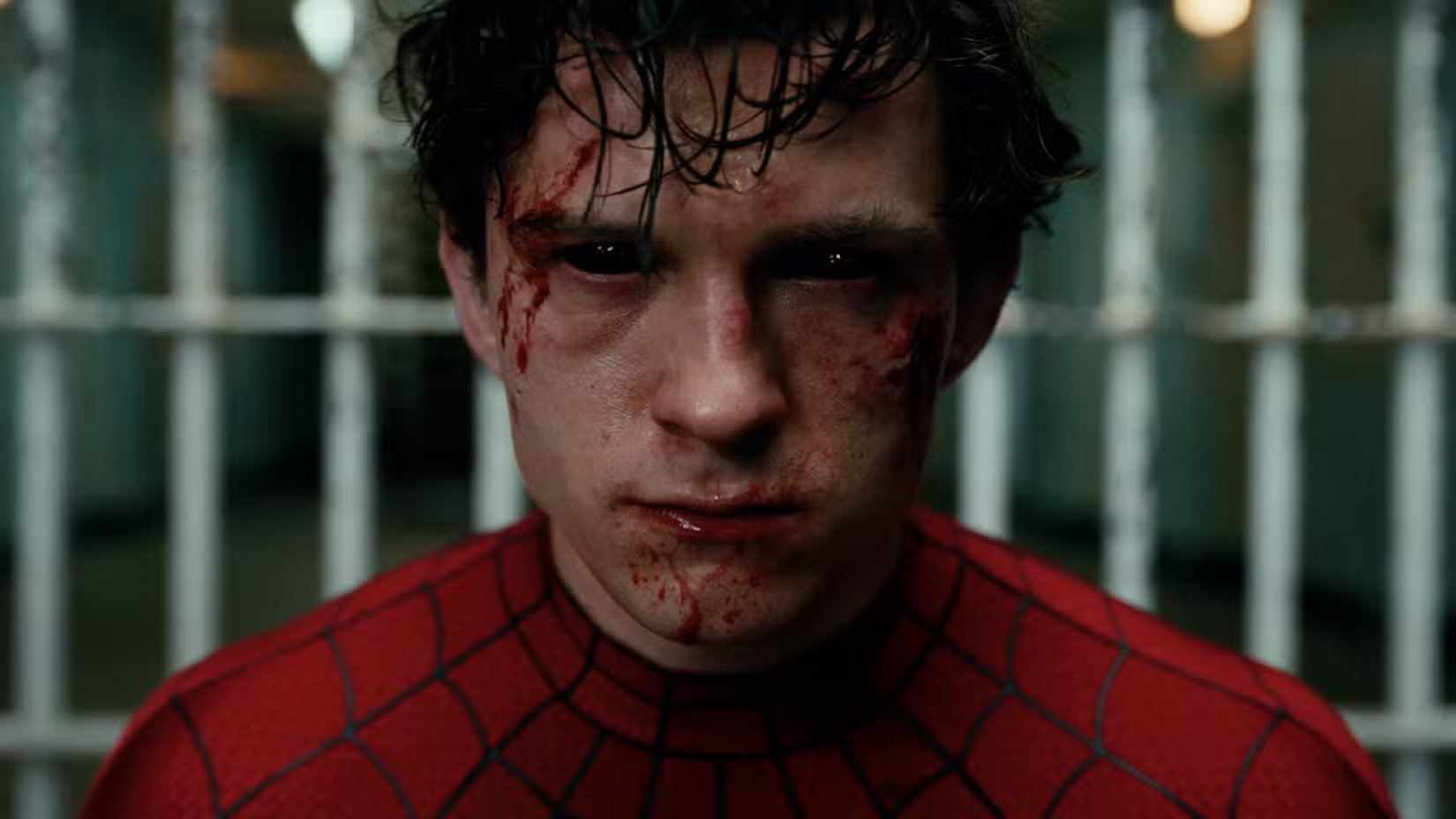
From what we can see in the trailer, Tom Holland’s Spider-Man appears to be going through his own additional transformations, including creepy fully black eyes and organic web-shooter, as well as the cocoon-building behavior previously seen in Marvel’s The Other arc in the comics. As I mentioned before, I doubt that the MCU will allow this particular cash cow to fully transform into a nightmarish spider freak that can scare away children, but there’s always a chance that the studio could surprise us with more horror elements. I’d also love to see the story explore Spidey’s mutation and use that as an excuse to formally introduce X-Men’s mutants into the MCU, especially since Sadie Sink is rumored to be playing Jean Grey in the flick.
However, even if Brand New Day doesn’t adapt as much of the Neogenic Nightmare as the promotional material has suggested, I’d argue that this particular season of Spider-Man: The Animated Series is still worth revisiting simply because it’s a great example of artists being able to work past network limitations in order to tell complex stories that approach full-on body-horror.
You must be logged in to post a comment.