Editorials
Have We Closed the Book on ‘Alien Vs. Predator’?

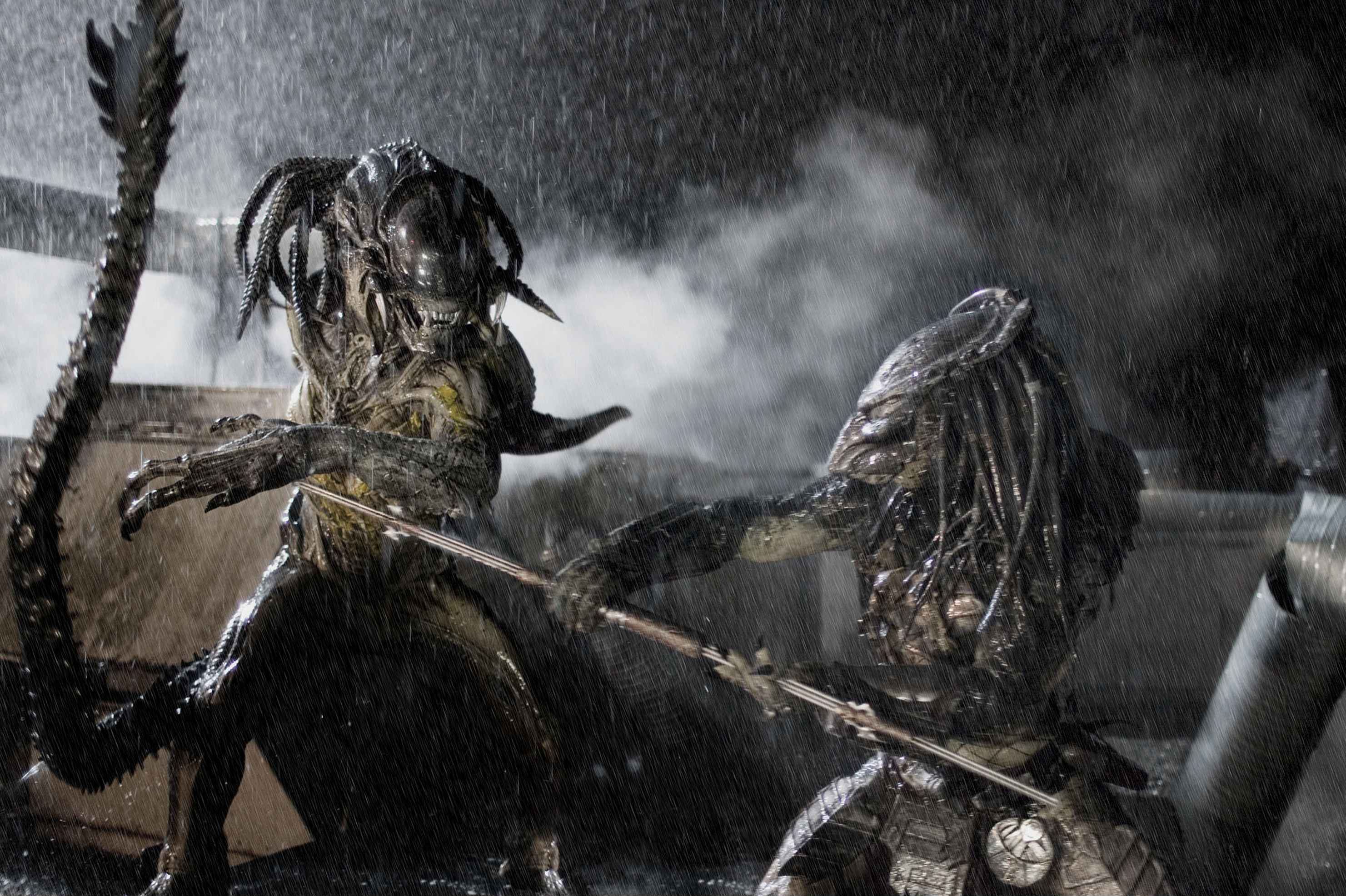
“When I said to [Ridley Scott], ‘You know, Weyland was a character in one of the Alien Vs. Predator movies,’ he just sort of looked at me like I had just slapped him in the face. That was the beginning, middle and end of all Alien Vs. Predator references in our story process.” — Damon Lindeloff
For fans of all things Alien Vs. Predator, the above quote from Prometheus co-writer Damon Lindelof likely sounds the death knell for the continuation of the AVP shared cinematic universe, and perhaps even beyond. Indeed, with Ridley Scott’s return to the franchise he started, and Shane Black looking to the original Predator to re-energize that franchise, neither seem interested in the high-concept crossover anymore. The two monsters appear to have consciously uncoupled, unlikely to share the same screen again.
While your feelings about the dissolution of this marriage depends on your level of devotion to either franchise, I’m happy to consider the AVP movies a fun but failed genre experiment and move on.
Before we close the book, however, let’s take a moment to consider the history of how the Alien and Predator franchises came together, ultimately resulting in two films and a few key references.
A year before Stephen Hopkins’ Predator 2 hit theaters in 1990, Dark Horse comics put the creatures together in a three-issue anthology called “Dark Horse Presents” (#34-36), the final issue of which pit the two in their first official battle.


During the production of Predator 2, effects artists John Rosengrant and Shane Mahan (who had also both worked on James Cameron’s Aliens), came up with the idea to include a Xenomorph skull among the Predator’s hunting trophies when Danny Glover boards the alien ship during the film’s finale.
The inclusion of the Alien skull was meant as an inside joke, similar to how Stephen Spielberg famously included Star Wars references in his early work, but it ignited the imagination of many keen-eyed viewers who, in a pre-Reddit 1990, shared the story of seeing the skull with friends who may have missed it.
I personally remember missing the reference in Predator 2, then, upon hearing the rumor, immediately renting the film again and fast-forwarding to the end of the VHS tape to see for myself.
Here’s that moment:
No doubt, one of the kids whose imaginations were set alight from this crossover was director Paul W.S. Anderson, a self-professed genre nerd, who brought the first AVP film to the screen in 2004.
One of the ways Anderson bridged the franchises was to make the smart decision to include the human counterpart to Aliens‘ android Bishop, Charles Bishop Weyland as played by the same actor, Lance Henriksen. And like in Prometheus, the Weyland in the film is looking for eternal life.
So, while I can understand why Ridley Scott would reject the idea of considering AVP cannon, Lindelof bringing up the connection makes perfect sense to me thematically.

Lance Henriksen as Charles Bishop Weyland in AVP.
Next came the Brothers Strause’s AVP: Requiem, by all accounts a misfire. And while the directors have claimed to be determined to make an AVP 3, now that Scott and Black are driving the respective franchises, I think it’s safe to say the project is unlikely to come together.
It’s worth noting that no film in the Alien franchise contains a reference to the Predator series, while Nimród Antal’s subsequent Predators continues the trend of Predator movies referencing the world of Alien. The references are harder to spot, but many believe that a Xenomorph skull appears at the Predator camp in the film, while characters utter a line verbatim from Aliens (“If the time comes, I’ll do us both”).
Even in the expanded world of comics and novels the Alien Vs. Predator products have either slowed down or become a little… silly. I mean, Dredd has entered the battle at this point just to keep the idea interesting. Don’t get me wrong. I love Aliens, Predators and Dredds, but that stew is a little overwhelming.
So, what do you think? Have we officially closed the book on the AVP cinematic universe? And what hope do you think the concept has overall?




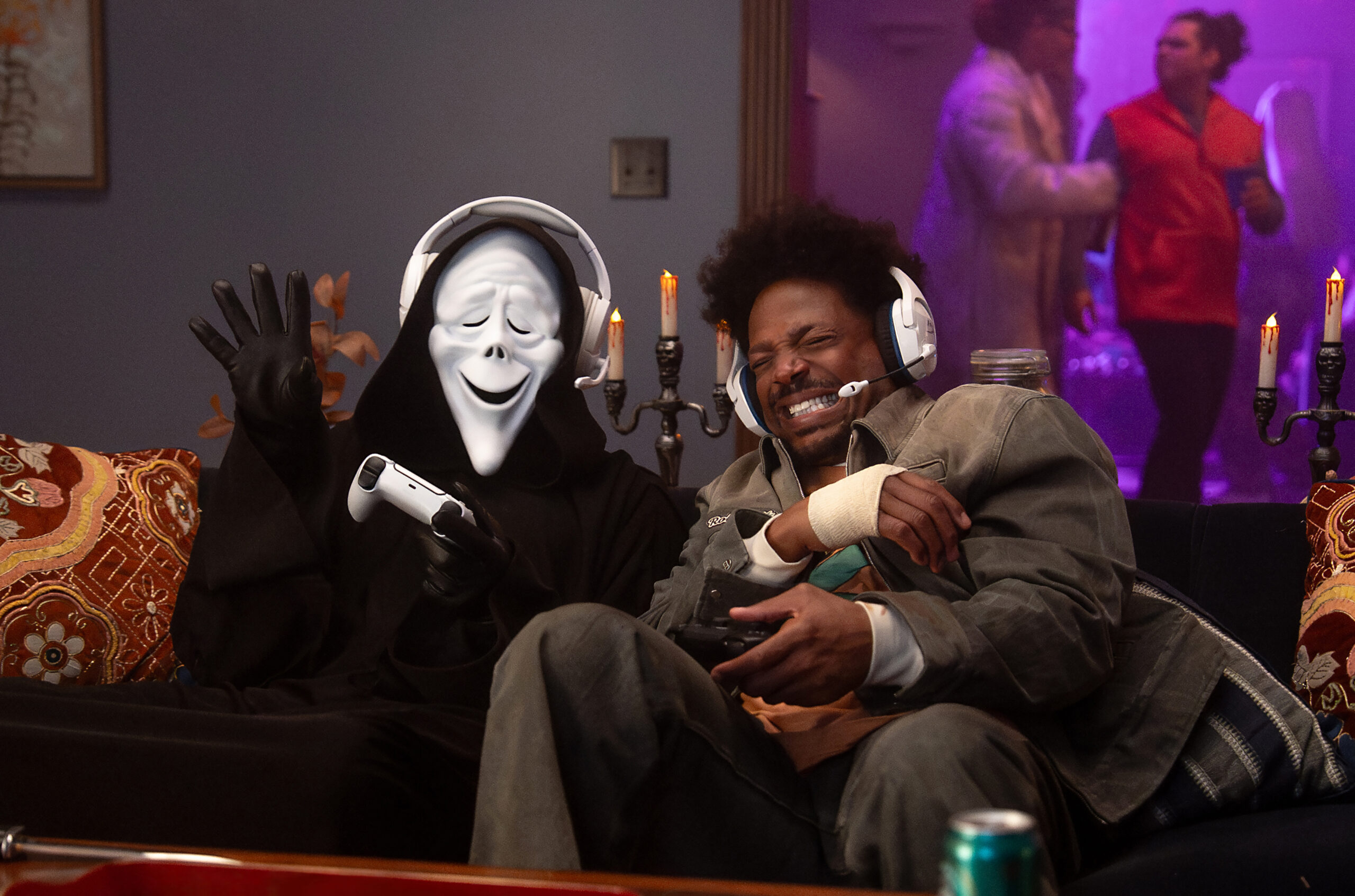
“Elevated Horror.” Of all the combinations in the English language, that one is the most insufferable.
It represents almost a decade of scary movies that, for the most part, took themselves too seriously. Horror responds to the moment, so its “why so serious” lean makes sense as we scuttle through the “worst of times” equation of Charles Dickens’ famous opening lines. But there’s still an opening and a need for a lighter approach; one that not only has fun with its audience but takes the piss out of a genre that is seemingly letting its newfound “respectability” go to its head.
Wes Craven believed devotees see horror films to let out their fears one primal scream at a time. At their core, these movies are roller coasters; they bring us as close to the edge as possible before pulling us back into a safety net of reality. The need for a bigger and badder coaster increases during times when the size of that net decreases.
There’s a thrill that comes from imagining being in a foot race with a madman, or outthinking the hordes of zombies on the other side of the door, plus the scavenger humans coming behind them. There’s even a rush that comes from imagining how one might deal with possession to see good triumph over evil in the end. It’s all about building tension and releasing it through catharsis. That cathartic release usually sounds like screams followed by laughter, which signals relief. Genre heavy hitters over the past 10 years offered very little of that respite when the credits rolled. Films like Hereditary, The Witch, Talk to Me, and even Smile (pick one) keep that tension going after the screen fades to black.

Hereditary
As the genre became obsessed with creating trauma metaphors, that lack of release made sense. Anyone with even a small sample size of traumatic experiences knows those emotions don’t magically resolve themselves in an allotted run time. But how much trauma can one take? Especially when there’s a mess going on outside that few of us can escape from. Movies offer that off-ramp, no matter how short.
Everything can’t be, nor should it be, “elevated.” Audiences need thoughtful explorations of life’s ills via monsters as much as they need murdering masked maniacs with kitchen knives. And no, it doesn’t have to go any deeper than that. Sometimes, a knife is just a knife, and it’s still worth our time and respect. As weird as it sounds, that simplicity is comforting not in spite of the trauma but because of it.
The worst of times should manifest more than just anguish. People need to laugh just as much as they need to think seriously about this moment in time. Even the Scream franchise forgot the meta rock upon which it built its church when the latest foray sacrificed the subtle comedy for serious drama. Scary Movie returned at the perfect moment. It provides the necessary laughs, but it’s not a cure-all.
This isn’t a call for Scary Movie imitators but a return to a mainstream landscape where Killer Klowns from Outer Space sat with The Serpent and the Rainbow, nestled neatly with the latest Nightmare on Elm Street, which took nothing away from The Vanishing.

They Live
Even They Live, John Carpenter’s horror sci-fi satire sandwich, kept its tongue firmly in cheek while discussing serious ideas still relevant in 2026. Yes, a film about aliens taking over the world through subliminal messaging only visible through coded sunglasses is, in fact, a tad silly. Carpenter understood that mainstream horror can’t become so self-important that it never looks itself in the mirror and laughs at that inherent silliness.
The thing is, horror historically excels at poking fun at itself. Most of the Scream franchise, The Cabin in the Woods, or The Blackening show adoration without kowtowing. They recognize tropes and trappings but invert them for an audience already in on the joke, but one that also finds solace in said conventions. This keeps the genre on its toes; once something gets parodied, it’s usually time to evolve. That breeds new ideas and fresh filmmakers, which not only strengthen the genre’s collective voice but also amplify it.
Get Out, as “elevated” as some critics want us to believe it is, is a cathartic, populist scary movie that spoke to an untapped audience rather than speaking down to them. Backrooms is one of the biggest horror hits in years, partially because it’s fine-tuned for modern-day teenagers instead of their parents. Movies like these tell everyone the genre is open for business; open for innovation and, yeah, open for new ways in which people can lovingly poke fun at with a wink and a nudge.
Horror needs dread as much as it needs laughter.
Catharsis is just as important as tension, and pulpy populism has the same merit as more high-brow material. Respectability shouldn’t come at the expense of an experience akin to walking through a haunted house. At a time when joy seems in short supply, horror should look to its past to map out its future, and make things just a tad brighter for audiences.

Backrooms
You must be logged in to post a comment.