Books
Robert Cormier’s ‘In the Middle of the Night’ Answers the Call of Fear [Buried in a Book]

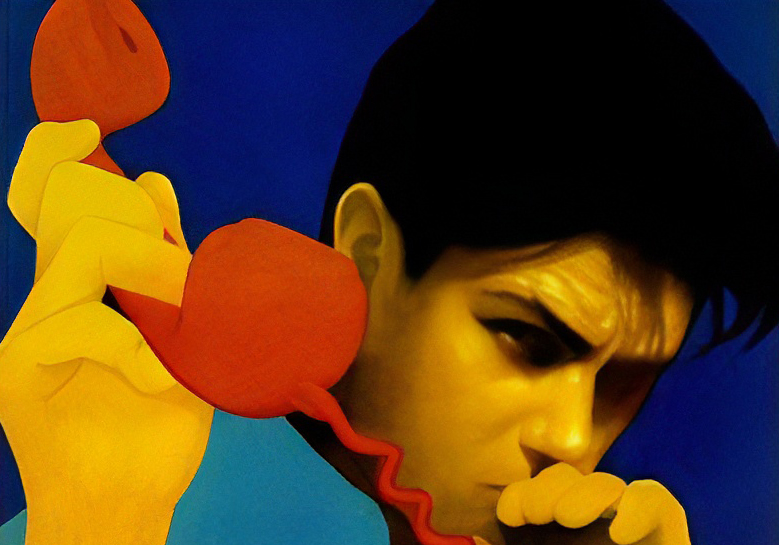
Twenty-two people died one fateful Halloween in Wickburg, Massachusetts. And as far as the town is concerned, the killer is still on the loose. Robert Cormier’s In the Middle of the Night sounds like it has the makings of a slasher story based on that vague description, but this 1995 novel’s high body count is the result of human error, not a murder spree. The celebrated young-adult author, who is best known for The Chocolate War and I Am the Cheese, follows this local tragedy from start to finish, hoping to make sense of the cause as well as the ceaseless grief of one survivor.
Cormier begins things in the past, twenty-five years prior to the main story. Inside the Globe Theater in Wickburg, the town’s underprivileged gather for a special Halloween show. The prologue’s unnamed narrator and his sister Lulu, both orphaned after their parents were killed in a car accident, are also in attendance. In no time, though, theirs and others’ amusement is cut short by an unexplained event. Readers are left hanging as the narrator closes with two foreboding sentences: “Ten minutes later, Lulu was dead. And the nightmare began.”
The story shifts to the present and introduces the actual main character, a 16-year-old named Denny Colbert. It is now early September, and the dreaded phone calls resume like clockwork. For Denny’s family, these calls signal the possibility of having to uproot their lives once again and try to start over somewhere else. Somewhere no one knows about Denny’s father’s past. At a young age, Denny learned to never answer the phone, especially around this time of year. But something is different now; his urge to pick up is becoming harder and harder to resist.

Temptation wins and Denny answers the phone one afternoon while his parents are out. Much to his surprise, the voice on the other end is as seductive as she is coy. She is not like the others who only call to accuse or insult Denny’s father. No, this alluring telephoner conceals her real rage and appeals to the boy’s natural curiosities about her, his father, and the “Globe Horror” that still lingers all those years later. Their conversations are built on lies, yet Denny feels more of a connection with this stranger than he does his own father.
John Paul Colbert put his foot down when Denny was seven, irately beside himself after his son answered the phone one day. The other party called his father a murderer, and he had no idea why. At age eleven, Denny finally realized the cause of his father’s unspoken misery and why they moved so many times. Now sixteen, Denny just wants “to be like other kids.” And what others take for granted every day, Denny envies. To him the telephone represents normalcy, but in the Colbert household, it is a feared entity — a reminder of something bad. Denny wants to move on, and breaking his father’s one and only rule is how he goes about it.
Cormier eventually returns to the past and recounts how John Paul earned his lifelong stigma. Back in Wickburg, the teenage French-Canadian immigrant got a job as an usher at the Globe Theater, working under a Mr. Zarbor. They worked closely together to ensure the success of a Halloween show. Unfortunately, they overlooked one detail: the hazardous balcony used for storage. Needless to say, negligence is what killed those twenty-two guests. All children, no one over the age of thirteen. The authorities cleared the 16-year-old John Paul of any legal wrongdoing, however the parents and others came after him once Mr. Zarbor took his own life. They needed a fall guy, and who better to blame than the new kid in town? The foreigner who accidentally started a fire when investigating the strange creaking noises coming from the balcony.
She will not talk about what happened to her while she was dead.
Cormier’s use of both first and third-person perspectives will create some confusion at first, but his doing so helps the story in the long run. An omniscient style suits Denny and his father; neither character says what they really want to say, so this point-of-view fills in the gaps. Meanwhile, the ostensible villain is more forthcoming with their thoughts and feelings. Words are short, sharp, and direct. The audience has no choice but to observe their sadness and soak up the pain. Regardless of perspective, though, Cormier explores the vast interiority of his troubled characters.
Like his other books, In the Middle of the Night comes across as personal to Cormier. The author, born and raised in a French-Canadian area of Massachusetts, inserts himself into the story, using both the father and the son as stand-ins for feelings of not fitting in. John Paul originally tried to conform; he was adamant about using contractions in his English, which Mr. Zarbor deemed necessary if he wanted to “sound like a real U.S. teenager.” Any chance of truly assimilating was off the table after the Globe disaster; he would always be an outsider to most everyone who knew of his involvement. As for Denny, the boy has no chance of leading a normal life so long as he lives in his father’s shadow and shares his shame.
The thriller element of In the Middle of the Night is not so much shoehorned in as it is faint and infrequent. The bulk of the suspense is saved for the end. Denny’s cryptic caller, who is none other than Lulu, has taken the long way to get her revenge. How she ultimately tries to make peace with her enduring pain and self-loathing since surviving the Globe accident, namely killing John Paul’s son with a lethal injection on Halloween, is a statement on people living in the past. From the newspaper reporter who pesters Denny to the annual deluge of harassing callers, everyone is fixated on what happened so long ago.

Had he been more communicative with him, John Paul might have spared his son from his own trauma. But like so many others, Denny mistook his father’s silence for something else. John Paul’s refusal to tell his side to the media is just his way of reconciling what happened. And as he later confesses to his son, John Paul puts up with the calls, the letters, and the insults because that makes those people feel better. At last, Denny realizes — and accepts — this is how his father chooses to move on. Lulu, on the other hand, is burdened by her ghosts up until the bitter end. She falls victim to another tragedy, one of her own making.
Cormier was criticized for not writing happy endings, but his stories are a reflection of reality rather than fantasy. And nothing about life or this book is ever easily resolved. At the very least, here a father and son finally see eye to eye, although that may be a cold comfort after how everything else goes down. In the Middle of the Night takes some getting used to for those expecting a linear plot with a defined perspective; it presents a lot of exposition before the book sets itself on a more direct path. Nevertheless, this consuming thriller doubles as a probing and honest study of characters haunted by their past.
There was a time when the young-adult section of bookstores was overflowing with horror and suspense. These books were easily identified by their flashy fonts and garish cover art. This notable subgenre of YA fiction thrived in the ’80s, peaked in the ’90s, and then finally came to an end in the early ’00s. YA horror of this kind is indeed a thing of the past, but the stories live on at Buried in a Book. This recurring column reflects on the nostalgic novels still haunting readers decades later.



![Lois Duncan's 'I Know What You Did Last Summer' Cuts Deeper Than the 1997 Movie [Buried in a Book]](https://i0.wp.com/bloody-disgusting.com/wp-content/uploads/2022/06/I-Know-What-You-Did-Last-Summer-1997-Feature-Image-1920x1080-Edit.jpg?resize=400%2C240&ssl=1)
![Lois Duncan's 'I Know What You Did Last Summer' Cuts Deeper Than the 1997 Movie [Buried in a Book]](https://i0.wp.com/bloody-disgusting.com/wp-content/uploads/2022/06/I-Know-What-You-Did-Last-Summer-1997-Feature-Image-1920x1080-Edit.jpg?resize=80%2C80&ssl=1)


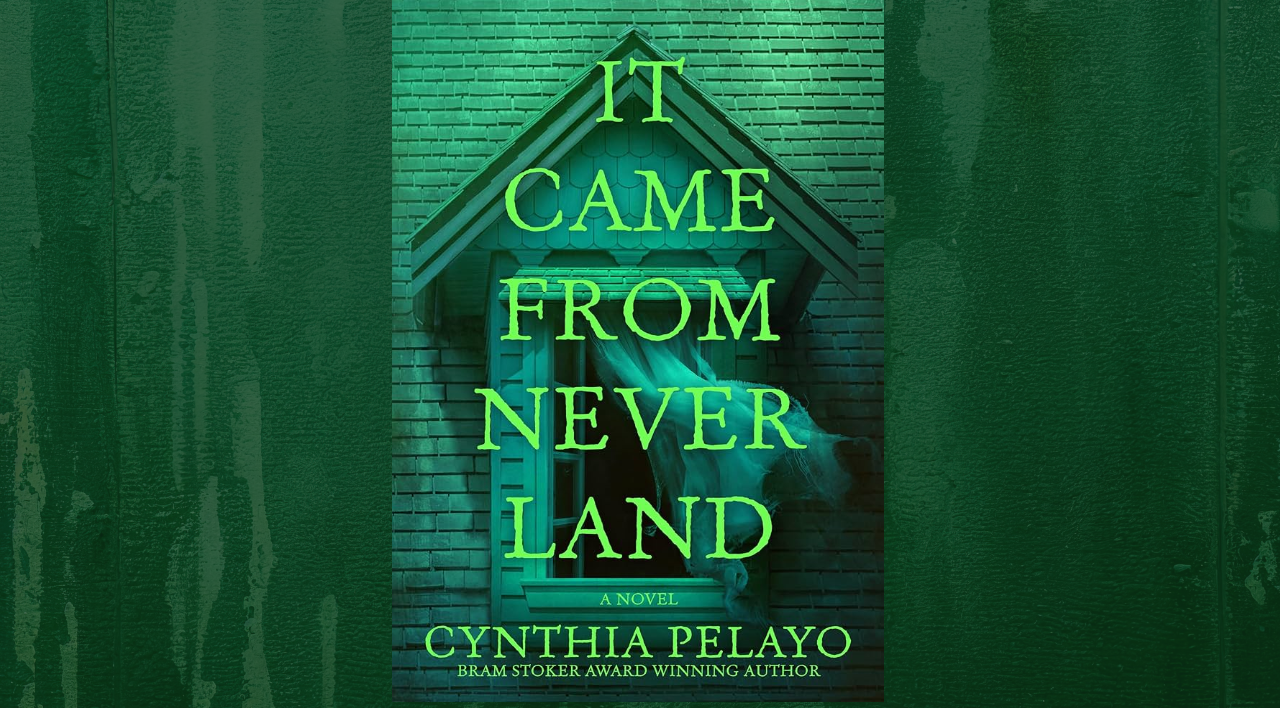
There’s a layer of the mythic in everything Cynthia Pelayo writes, whether she’s charting the little-known history of her home city of Chicago or digging deep into the pool of shared stories that’s served humanity since ancient times. Regardless of subject matter or narrative, Pelayo reads like a writer constantly in search of the threads of legend and myth that bind us all together and keep us awake at night.
It Came From Neverland, Pelayo’s latest novel, takes that search and applies it to one of the most famous children’s stories ever conceived, J.M. Barrie’s beloved and oft-adapted tale of the Boy Who Never Grew Up. But this is not just a Peter Pan retelling, or a Peter Pan meta-sequel. Through gorgeous prose, finely drawn characters, and an iron grip on the themes that drive the story, Pelayo crafts It Came From Neverland into one of the year’s must-read genre novels, both a horrifying spin on Peter Pan and a luminous dark fantasy about the search for salvation in a cold, brutal world.
In Pelayo’s version of events, Wendy Darling and her brothers John and Michael really did travel to Neverland when they were children, drawn there by a charismatic and irresistible figure called Peter Pan. But this Neverland is far from the Disney version, and after fighting to survive in that ageless place, the children made their way home and shut Peter Pan out of their lives, refusing to so much as utter his name, lest he find them again.
Flash forward to 1914, where Wendy’s working as a schoolteacher at Marigold House, a London orphanage growing increasingly crowded amid the outbreak of World War I. By day, she teaches and volunteers at a local hospital, reading to the war wounded, and by night, she remembers to check every window latch and keep an eye on every shadow. But lately those shadows seem to behave strangely again. Crows caw all around her. And worst of all, children are disappearing again. Peter Pan is back, and faced with memories of how no one believed her the first time, Wendy prepares to face him one more time.
This is a remarkably well-suited atmosphere for moments of classic, chill-inducing terror, and Pelayo wastes no time weaving a world in which every bird call, every stray thought from the mouth of a child, could be evidence that this monstrous Peter Pan is near. Wendy lives a haunted existence, and as the chaos of war grips London, old fears grip her while new ones fight for position. If you come to this novel looking for something like Stephen King’s IT by way of J.M. Barrie, you’re going to get it, through flashbacks and dark lore and wonderfully well-timed scares, but Pelayo’s not done.
This version of Wendy Darling, through whom we see most of the narrative, cares for children in adulthood because she did not receive the care she needed herself as a child in the aftermath of a traumatic experience. She considers it her duty to listen to them, to protect them, to understand them in a world that still views them not as human beings, but as potential locked up in tiny bodies.
Setting the book in 1914, when young men across Europe were signing up to go and die in a war they didn’t quite understand, underscores this beautifully. Children are grist for the mill in the world of It Came From Neverland, their eager spirits waiting to be crushed by a machine of war and empire and capitalism that will not relent even if an armistice eventually arrives. It’s a wider, more existential layer of horror than the storybook monster, which gets us to open the book in the first place, but the real brilliance at work here is how Pelayo ties it all together.
At the core of all of this, the beating, icy heart of It Came From Neverland‘s horror and its search for meaning amid the narratives of war, children’s fiction, collective memory, and more, Pelayo is most interested in what it really means to never grow up. It means retaining a sense of play, yes, but it also means a refusal to move on, to embrace not just the responsibilities of aging, but the moral burdens of it.
Peter Pan is a monster not because he likes to play, but because he does not consider consequences, mortality, or even the needs and desires of others. The same is true of the leaders of Europe sending young men off to die in a war, and the same is true of leaders now, playing dice with human lives amid the rise and fall of the stock market. To never grow up is to lose something essential about being human, and Pelayo depicts that loss as both existentially terrifying and heartbreaking. That terror and heartbreak drive the novel, but Wendy’s efforts to escape that terror and to mend her broken heart make it fly.
It Came From Neverland is available June 9 wherever books are sold.


You must be logged in to post a comment.