Editorials
‘Found’ – Unpacking a Gruesome Coming-of-Age Horror Movie

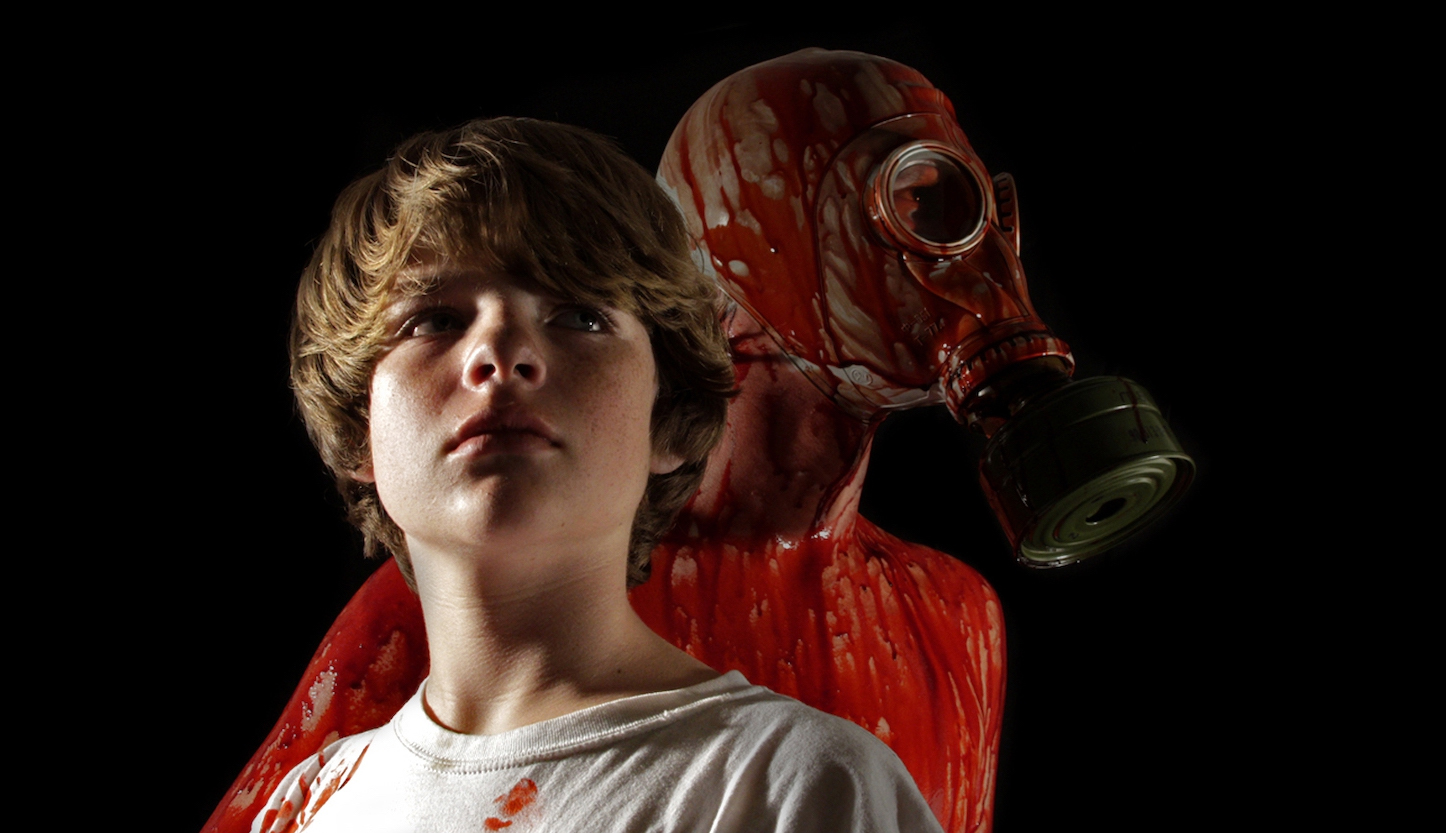
In Scott Schirmer’s film Found, a boy wants to know why his older brother kills people. Marty (Gavin Brown) originally believed horror movies, something he and Steve (Ethan Philbeck) both loved, was the cause. Over time, however, the root of Steve’s evil proves to be more nebulous. There are other important factors when understanding why this young man became a serial killer and why his little brother kept his secret for so long.
Found was a dream come true for Schirmer, who sought out author Todd Rigney after falling in love with his 2004 novel. “There was just this feeling of dread that hung over the entire story,” Schirmer said. And with Rigney as his co-writer, the pair then wrote a rather faithful adaptation of the source material. Like the novel, the film begins with Marty discovering a severed head inside his brother’s bowling bag. Oddly, though, Marty’s reaction is less one of shock and more of curiosity. Even stranger is the fact that Marty refuses to tell anyone, least of all his and Steve’s parents. In the meantime, this warped 12-year-old continues to sneak a peek at every new head that turns up in Steve’s bedroom closet while also battling his own unsettling compulsions.
Found is a visceral meditation on the nature versus nurture debate. To an outsider, both Marty and Steve were raised in a seemingly well-adjusted nuclear family, and their surroundings are as normal and mundane as they come. A closer look, though, reveals the growing cracks in Marty’s household as well as an ominous undercurrent. While the parents (Phyllis Munro and Louie Lawless) here have an easier time raising their youngest son, really the most this mom and dad have to worry about Marty is his morbid interests, which are primarily horror movies and the gory comics he and his friend draw. Nothing too out of the ordinary for a kid his age. Meanwhile, Steve is more mysterious and complicated.

The easiest explanation for Steve’s killer instincts are the horror movies he consumes. And not just any horror movies either; Steve is drawn to the more depraved ones. As this film studies its antagonist’s origins, audiences remember how it was not that long ago when the media scapegoated cinema as a motivator for real-life violence. The blame shifting is cyclical, and many people will agree that fiction is not at fault for violence in society. Rigney, however, is not so quick to absolve horror movies without at least giving the viewers some food for thought.
As typical as Marty and Steve’s upbringing appears to the naked eye, there is something rotten about these boys’ home life that remains unknown to most everyone else in town. It’s not long before Marty and Steve’s father makes the undertone unmistakable; without hesitation, Louie Lawless’ character drops a racial expletive during dinner. Rigney’s novel, which is told from Marty’s point of view, states the father has “never been really friendly towards Black people.” He refers to them as degenerates, a sentiment that Steve echoes, albeit with more ferocity. So while Steve and his father frequently butt heads about everything else, they share a silent bond built on bigotry.
Schirmer and Rigney did the audience’s ears a favor by not fully adapting Steve’s tirade from the novel. Anyone who has read the basis for Found will understandably be repulsed by this overlong and vile moment, which says a lot considering what all else happens in the story. The film indeed removes the bulk of Steve’s hate speech, but it retains the essence, just with less words.

Marty’s mother is most concerned by her youngest boy’s fascination with horror. She probably felt the same way with Steve, and after seeing how antisocial he turned out, she is more cautious with his little brother. In truth, the mother here is failing to take her husband’s racism and violent streak into account when analyzing Steve and trying to prevent the same fate from happening to Marty. It’s just easier to address the horror movies than it is to confront the husband.
Found is sometimes ambiguous with its opinion on horror, particularly when the film later reveals Steve’s crimes are directly inspired by a graphic shocksploitation flick called “Headless.” Upon discovering this explicit link between fantasy and reality, Marty then asks himself, “did this movie turn my brother into a killer?” As much as viewers might think Found is blaming the horror genre for Steve’s actions, the story does strongly suggest it takes more than a few B-movies to make someone commit murder. “Headless” — which received its own extended feature a few years after Found was made — just so happened to be something Steve gravitated toward and used to foster his impulses. And after years of racist indoctrination, Steve acted on his rage.
More proof that Found isn’t condemning horror can be found in its very own narrator. Marty has been exposed to the same exact factors and stimuli as Steve all his life, yet the two sons ultimately diverge. That’s not to say Marty didn’t come close to the same urges. After being bullied by everyone from his classmates to his best friend, the boy finally stands up for himself at a church picnic. He brutally beats his tormentor and then refuses to apologize for it. This is as cathartic as this film ever gets. A major difference between Marty and Steve, though, is the 12-year-old eventually regains his sense of morality. Steve, on the other hand, goes on to do something utterly heinous in the film’s last act that demonstrates how far gone he truly is.

Marty saw horror as a safe release for his anxieties, and as a way to stay close with his brother, father, and best friend. But like in many other coming-of-age stories, childhood can be tainted by reality. Marty just didn’t find death as entertaining anymore when it was now unbearably real and so close to home. Touching a fake head like those seen in a horror movie will never be the same to someone who has held the real thing.
Young as he may be, Marty has a better grasp of the world around him than he lets on. So much so, he bottles everything up, including Steve’s secret. Because he is so tuned in to everything happening in his family, Marty doesn’t want to make things worse. It may not be a great life, but it’s the only life Marty recognizes. And most importantly, he still wants Steve to love him. As odious as his displays of affection are, the way Steve still cares so deeply about Marty is touching. Marty, in a sense, is tied to his last shred of humanity, and up to a certain point, Steve protects him fiercely.
Despite having limited resources, Scott Schirmer and his team did a commendable job of bringing Todd Rigney’s dark story to life. Lead actors Gavin Brown and Ethan Philbeck each delivered admirable performances, with Philbeck injecting just the right amount of sadness into his character. The film’s glut of shock buttons will also linger on the brain long after watching. Admittedly, Found will not not be for everyone, but for those who can look past its unpolished appearance and execution, they’ll find a challenging story with its own unique set of rewards and ideas.
Horror contemplates in great detail how young people handle inordinate situations and all of life’s unexpected challenges. While the genre forces characters of every age to face their fears, it is especially interested in how youths might fare in life-or-death scenarios.
The column Young Blood is dedicated to horror stories for and about teenagers, as well as other young folks on the brink of terror.





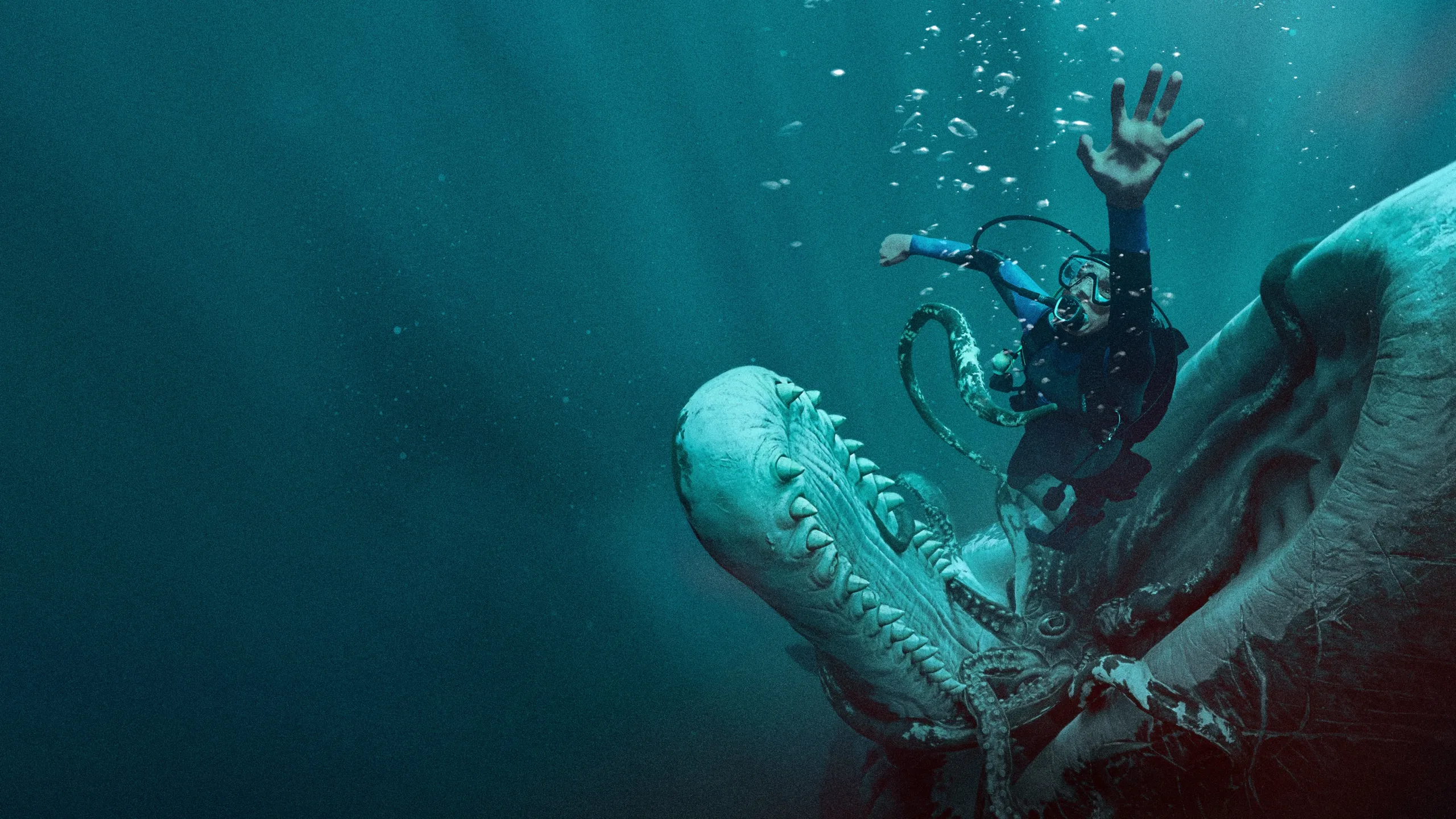
Pulitzer Prize-winning author Daniel Kraus took the literary world by storm back in 2023 with the release of his hit novel Whalefall. A terrifying yet intimate survival thriller with mythological undertones, the book was almost immediately bombarded with offers from movie studios wanting to adapt its claustrophobic imagery to the big screen.
Fast forward to June of 2026, and we finally got our first glimpse at Brian Duffield’s long-awaited adaptation of Whalefall, starring Austin Abrams as our unfortunate lead who gets swallowed alive by a sperm whale. While this two-and-a-half-minute teaser only covers the beginning of the story, it’s already been making waves online (and in-person at select 4DX promotional screenings) as one of the most stressful cinematic experiences of the year.
In fact, my own wife had to cover her eyes and exclaim, “You’re definitely not dragging me to watch this one” when we saw the whale’s jaws begin to close in on Abrams, with this incident alone already leaving me convinced that this will likely be one of the biggest genre hits of the year. With that in mind, I’d like to invite you to take a closer look at the teaser in order to break down interesting details and get a better idea of what’s in store for genre fans when the movie finally comes out this October.
Of course, as usual, don’t forget to comment below if you noticed something we didn’t!
Now, without further ado, here are five things we learned from the Whalefall trailer!
5. Austin Abrams Performed Many of His Own Stunts

Much like in his previous film, No One Will Save You, Duffield insisted that this visceral experience should be grounded by our main character’s believable reactions, regardless of the plot’s effects-heavy setup. That’s why the camera always makes sure to linger on Abrams through his diving mask, so we know that it’s really him going through this ordeal alongside the audience.
While plenty of CGI was used in order to bring this larger-than-life story to the big screen without killing our leading man, Abrams apparently insisted on performing many of his underwater stunts himself (several of which are visible in the trailer) – much to the chagrin of a worried Duffield and the flick’s stunt coordinator, Shauna Duggins.
4. The Film Seamlessly Transitions Between the California Coast and Underwater Sets

Duffield obviously wasn’t about to drag his crew out to the middle of the ocean and shoot inside a real sperm whale, but it’s reassuring to see the filmmaker blend on-location footage with the underwater tank segments and the literal belly of the whale set.
There may be plenty of CGI stitching these elements together, but the trailer shows us that only the truly impossible shots are completely digital, meaning that the filmmakers didn’t take the easy way out when it came to adapting this unique story.
3. The Whale is Only Part of the Story

Book adaptations tend to leave out inner monologues and the occasional flashback in order to streamline the narrative (which is one reason why it’s so difficult to translate Stephen King novels to the big screen), but a claustrophobic parable like Kraus’ Whalefall would get a bit dull after a while if the whole thing was entirely set within the creature’s stomach.
That’s why it’s such a relief that the trailer hints at how Duffield will also be adapting many of the book’s introspective moments chronicling our protagonist’s harsh upbringing under his troubled father. Not only do these inclusions give the audience some much-appreciated breathing room, but they also give Josh Brolin a chance to shine as a truly complicated character.
2. The Movie is Keeping the Book’s Scientific Accuracy…

While Kraus’ novel was inspired by a viral video of kayakers nearly being swallowed by a humpback whale, the writer ended up consulting with marine biologists about exactly what kind of situation might lead to a whale actually eating a human being alive.
The answer was surprisingly specific, as cetaceans are almost universally known to be friendly towards humans. However, even a gentle giant can make mistakes, and as we see in the trailer, Abrams’ unpleasant fate is more of an accident than anything else – with the massive sperm whale only trapping the poor diver in the first (and thankfully acid-free) chamber of its stomach due to a mix-up involving a giant squid.
Fortunately for the film’s special effects artists, they can now reference the first-ever footage of a real-life sperm whale chowing down on one such squid, as this freaky recording was released late last year.
1. …With a Catch!

Duffield may be doing his best to recreate the grounded (or is it submerged?) thrills of Kraus’ novel, but there are limits to what can be depicted onscreen while still guaranteeing an entertaining movie. That’s why it’s no surprise that Whalefall will take advantage of certain cinematic parlor tricks as the director tests the limits of both physics and biology so we can actually watch his movie.
For starters, the innards of the whale itself have been greatly exaggerated so there’s enough space to make out the action, and in the spirit of movies like Neil Marshall’s The Descent, there also seems to be plenty of non-diegetic lighting meant to show us what’s going on even if Abram’s character wouldn’t necessarily be able to see anything.
You must be logged in to post a comment.