Editorials
Set Report: ‘Drive Angry’ Part 1: Get Ready for a Violent, Bumpy Ride!

Those of you dying for a film actually shot in 3-D rather than post-converted into a pop-up book will be happy to know that Patrick Lussier’s Drive Angry 3D, the follow-up to his hit My Bloody Valentine reboot, is exactly what you’re looking for. Though it isn’t scheduled to hit screens until February 11th, 2011, inside you can check out the first part of B-D reporter Chris Eggertsen’s visit to the Shreveport, Louisiana set back in May. In addition to interviews with producer Michael De Luca, co-screenwriter Todd Farmer and actor William Fichtner, Chris also had the opportunity to check out the fiery outdoor set to get a closer look at all the action.
“‘Jason X’…did not become the movie that I thought it would be. That happens. It’s happened with every movie I’ve ever [worked on]. It didn’t happen on this one. We wrote it and it’s there. Nobody changed it. Nobody gave us notes and said, ‘We want this. We want the girl to be more this. We want the hero to be a dog.’ We didn’t get any of that crap. This is the movie that we wrote and it’s never happened before.” — Co-screenwriter Todd Farmer

I did have to leave my room, of course, in order to travel to the nearby set – located at the Louisiana State Fairgrounds – and I have to say I was pretty excited to check out what was in store. In case you couldn’t tell by the official title, Drive Angry 3-D is indeed being shot in the third dimension – meaning, like, actually shot in it, not post-converted like other recent weak-sauce debacles (Clash of the Titans, The Last Airbender, et al). The film follows Cage as Milton, a man who is called up from Hell to embark on a bloody quest across the country to hunt down members of the satanic cult who killed his daughter and kidnapped her baby girl.
Lussier wrote the 3-D specific screenplay with his Bloody Valentine partner Todd Farmer; they then shopped the script around to several producers, including Michael De Luca (Ghost Rider, Lost Souls), who immediately warmed to the project and signed on to shepherd it. The producer, having established a relationship with Nicolas Cage following their collaboration on Ghost Rider, knew the car-and-genre-film-loving actor would appreciate the aesthetics of the script and sent it along to him; once Cage signed on, he brought production company Millenium/Nu Image – who he had a pre-existing deal with – on to the project, knowing they were currently looking to finance an action movie in that budget range. After the movie was officially greenlit, Summit Entertainment quickly snagged distribution rights Stateside.
“That all happened within a matter of weeks“, said the amiable De Luca when he sat down with us early in the evening, in an auditorium located across the street from the current shooting location. “It was one of the quickest-financed movies I’ve ever had in my experience.”
The producer gave off a casual, relaxed vibe as he explained his first reaction to reading the script. “It blew me away because I like hyper pulpy, super violent kind of Tarentino- esque, Shane Black-esque, Jim Thompson-esque, hard-`R’ character-based stuff. The script that Todd and Patrick wrote is an homage to that aesthetic…it seemed to marry that single minded personal mission of righteous revenge…with the smash `em up redneck car chase movie, `Two Lane Blacktop’ or `Vanishing Point’ or `Dirty Mary Crazy Larry’. So it seemed like a movie written by movie lovers, for movie lovers, and that’s how I took it when I read so that’s why I got really excited.“
Speaking of car chases, the film is certainly heavy on those – the breakdown, as De Luca spitballed, is somewhere around 40% driving, 60% on foot. To that end, the film features a fuckload of classic muscle cars driving at unreasonable speeds to give it the feel of one of the `70s action films mentioned above – think loud engines, twisted steel, gunfights out car windows and massive crashes and explosions done in-camera – no fake CG shit.
“We all kneel at the altar of William Friedkin in `French Connection’ and the stuff in `Bullitt’ and anything we can do practical“, said the producer. “We didn’t want to reinvent the wheel, but we wanted to be the anti-CGI enhanced car chase movie. So a little bit of what Tarantino tried to do with `Death Proof’. We went in that direction.“
De Luca gave us a little more insight into some specific action scenes featured in the film that he feels really capture the overall tone of the movie.
“Nic starts this movie off in this same kind of genre of `I’m mad as hell and not going to take it anymore. I can’t trust anyone else to do this but me.’“, he said. “We’re back in the age of the individualistic righteous hero. That [opening] scene is a great indicator of the kind of movie you’re going to see. There’s an insane car chase involving an RV, a Suburban, the Dodge Charger, police cars – it was a big clusterfuck multi-vehicle car chase scene after a church gun fight that I think will be a showstopper and that’s kind of in the middle of the movie. And then of course our ending, where Nic goes in for the final kill. Which actually shows his car performing the last example of heroics and just jumping over a prison wall and landing in the middle of this horrific scene where he has to rescue his granddaughter. I think those three bits will be the calling card for this movie in terms of `I haven’t seen that before’. What’s great is they all have an emotional undercurrent.”
Joining De Luca was Millenium/Nu Image-based executive producer Rene Besson, who spoke about the company’s immediate belief in the project and their mandate to allow Lussier to make exactly the film he wanted. “We read the script and immediately knew we loved it“, he told us enthusiastically. “We said, `That’s it. We wanna make this film, period.’ And from that day, we just ran some numbers, we put it together, and within I’d say a week we knew we were making the movie and that was it…you know, we’re very good in that way. And we really don’t get in the way of…the filmmakers making a really cool movie if they know the space really, really well. We’re generally hands-off, you know? And we believed in the script when we read it. And we just felt like we needed to go, and literally weeks later we were making the movie.”
Also joining us in our “holding area” was co-scripter Todd Farmer, a solid tower of a man sporting a beard and shaved head who looks something like a Hell’s Angels bruiser. He made sure to drive home the point that the film won’t be a PG-13 cop-out but the genuine article – a limb-severing, bone-crunching hard-`R’ affair much as My Bloody Valentine was.
“It’s as violent as you can get and still get an `R’, I think. We start and the moment the movie opens it’s in your face“, said the writer, while also making sure to add that there’s a real character-driven engine driving the movie. “There’s tons of hardcore `R’ action, nudity and you name it, but at the same time there really is a story there. It’s got heart and at the end of the movie people will feel it.“
He also went on to bolster Besson’s contention that Millenium is overseeing the production in a very “hands-off” fashion, giving he and Lussier mostly free reign to indulge in their unhinged, balls-to-the-wall vision for the film. He contrasted that with his experience on another movie he wrote nearly a decade ago, before the studio forced considerable changes on the project that deviated severely from his original conception of it. “‘Jason X’…did not become the movie that I thought it would be. That happens. It’s happened with every movie I’ve ever [worked on]. It didn’t happen on this one. We wrote it and it’s there. Nobody changed it. Nobody gave us notes and said, ‘We want this. We want the girl to be more this. We want the hero to be a dog.’ We didn’t get any of that crap. This is the movie that we wrote and it’s never happened before.”
As far as the 3-D format is concerned, Farmer indicated that they hope to strike a good balance between the fully immersive 3-D of, say, Avatar, and the more “gimmicky” 3-D of a movie like The Final Destination (my comparisons, not his). “I think there’s a place for both…there are moments where it’s just Nic Cage and Amber Heard and you’re in the car with them and it’s not stuff flying at your face but you’re literally sitting in the backseat. You’re sitting there and it’s just sort of interesting. At the same time we’re going to throw cars and guns and bullets and frogs and naked people at your face because it’s fun and that’s the roller coaster.”
Following these initial conversations we were shepherded over to the set, a bombed-out, open-air building located across the street that those on the production were calling an “abandoned prison yard“. The building, sporting exposed walls painted with all manner of Satanic imagery (inverted pentagrams, et al), featured as its centerpiece the aftermath of a car chase that apparently didn’t end well – the two vehicles (one an RV, another a classic muscle car of some sort) casting a devilish orange glow along the walls of the crumbling building as fire shot through their windows in a controlled burn.
The stakes on set were clearly high; I couldn’t help but feel like I was in the way as I desperately tried to keep out of the path of scurrying crew members, rushing around like ants, barked orders nipping at their heels, the flaming vehicles giving the entire scene a hellish severity. The movie does deal with Satanists, after all. Funnily enough, Farmer (under orders from the film’s publicists, no doubt) had been coy about the true nature of the cult during our talk with him, but as we stood there it wasn’t hard to guess at its true nature. Had they been hoping we wouldn’t notice the “666” symbols spray-painted on the walls?
The particular shot being filmed at the moment was focused on Nicolas Cage’s hero, desperately crawling through the dirt near the flaming vehicles as the leader of the cult – the Jim Jones-meets-David Bowie-esque Jonah King (played by Twilight dad Billy Burke) – kicked him over and over, screaming something about “the baby” as he loomed like a rangy, black-leather-pants-clad madman. In short, he looked every inch the satanic dictator. A few paces off to the side, lounging about in disturbingly calm and collected fashion, was William Fichtner, who in the film plays an agent from Hell known only as “The Accountant“, sent to tail Nicolas Cage’s character on his quest.
As several different takes of the shot were filmed, a small group of us gathered around “video village” to look on at the monitors, trading off a thick pair of 3-D glasses to watch the scene unfold in all its 3-D glory. In all honesty I’m not much a fan of the format, but nevertheless it was very cool seeing the raw product unfolding live in three dimensions before my very eyes. I for one came away from the set impressed and grateful that I’d had the opportunity to witness a pretty awesome-looking scene.
After a quick trip to the craft services area to grab some munchies, our group then took a little trip over to a nearby warehouse, where several of the classic cars used for the production were being held. These included a ’69 Charger (more on that later) and a ’72 Chevelle. After several of the straight guys in our group had themselves a nice community circle jerk around the gleaming vehicles, it was off to talk with special makeup effects designer Gary Tunnicliffe, who gave us a peek at a few “severed limbs” from his trailer (including a leg blasted apart by a high-powered gun).
Back in the auditorium, we sat down to have a chat with the dapper William Fichtner, the instantly-recognizable character actor who has been doing great work in major films for years but whom most people don’t know by name. The actor has in the past worked for top-shelf directors like Michael Mann, Ridley Scott, Robert Zemeckis and Doug Liman. Clearly on lockdown thanks to the on-set publicist, when asked to describe his character in more depth Fichtner comically intoned: “Well, he wears one suit with one tie and one shirt. And he always looks really, really good.” Fichtner did indeed look mighty fine, the suit perfectly tailored to his lanky 6′ frame; however, he did sport one tell-tale facial scar. “That’s a 3-D moment; wait until you see how [I get the scar]! I was aware of the 3-D-ness of that one…[but] I think the Accountant has an ease and a grace that…well, he doesn’t want to get dirty. It’s not even about getting dirty, it’s not necessary.“
From Fichtner’s description, “The Accountant” is a fish-out-of-water in the film’s “Red State“, down-`n’-dirty aesthetic, as indicated when the actor described his character’s first appearance in the script.
“It might be 20 pages into the movie and you’ve seen so much by that point – colorful characters and grungy places, and slap the 3-D on top of that like eye candy“, he said. “All of a sudden, this character shows up and there’s no one else looking like him. Hopefully I’ve found the right rhythm; it’s different because he’s different. The first time you see him, he’s just walking down the road, then I run into some people we’ve already met, a waitress and a short order cook. We have a little exchange and it’s very interesting and it has a little ballet to it.“
CONTINUED IN PART 2




I was never against Sony’s initial idea to produce solo movies based on Spider-Man’s most memorable supervillains. After all, a hero is only as good as his Rogues’ Gallery is intimidating, so it stands to reason that there were plenty of dark stories to tell here.
While rushed productions like Morbius and Kraven the Hunter didn’t quite turn out as I had hoped, it’s a relief to see James Gunn and the DC Extended Universe learn the right lessons from Marvel’s flops by investing in supervillain stories that aren’t afraid to step into the horror genre.
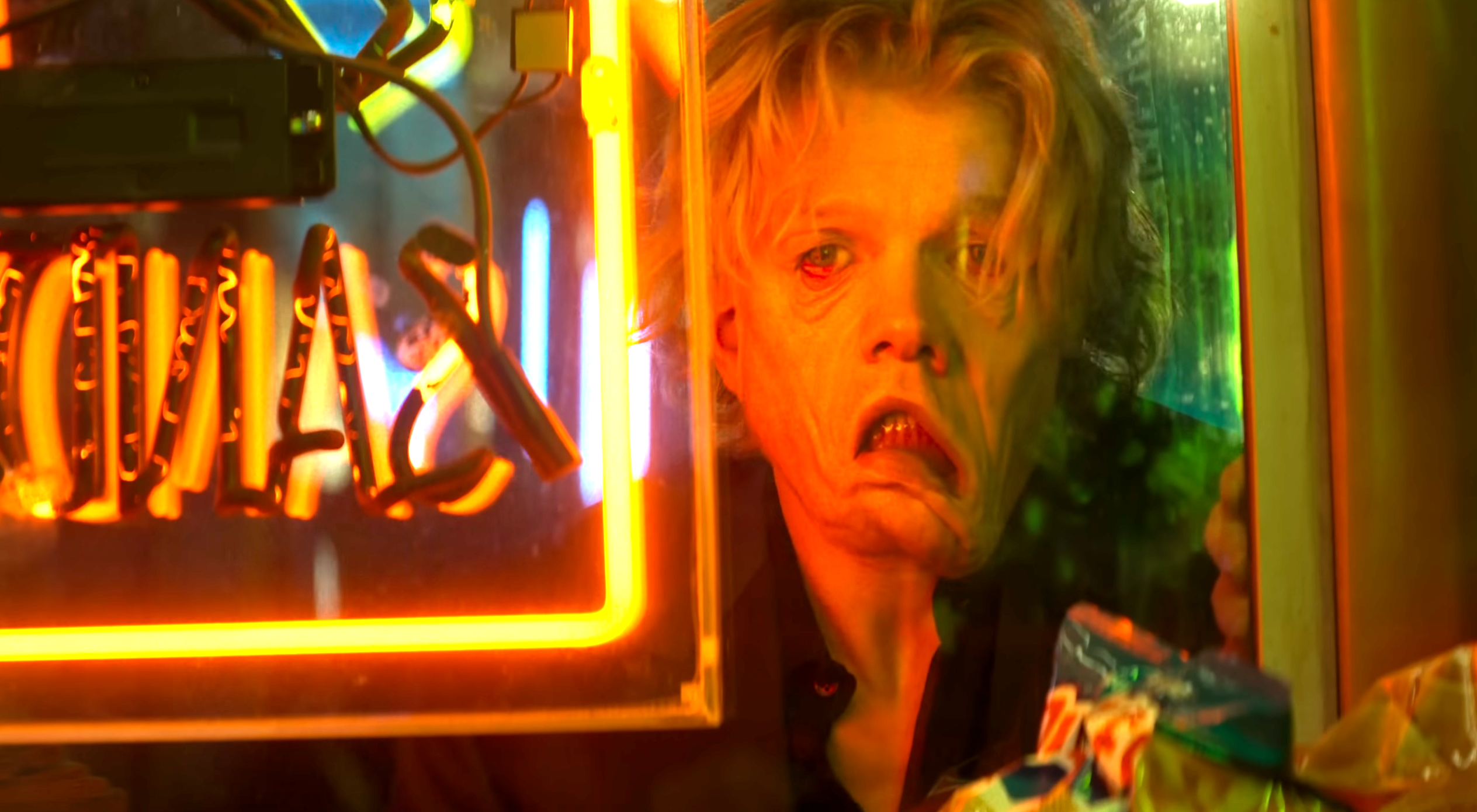
The new trailer for James Watkins’ upcoming Clayface movie is a great example of this, as the new footage confirms our suspicions that the movie is set to be a full-on piece of body horror focusing more on telling a standalone scary story than setting up a brand.
With that in mind, I’ve decided to take a closer look at the trailer in order to find out what we can expect from this highly anticipated comic-book adaptation from hell.
So without further ado, here are four things we learned from the new Clayface trailer!
4. Matt Hagen is a Club Vesuvius Regular

A seedy nightclub owned by “former” mobster Johnny Sabatino, the comic books have established Club Vesuvius as a hotspot for criminal activity and metahuman action since 2009. Throughout the years, the club has seen everything from an attempted arson by Firefly to magical acts performed by Zatanna herself.
The trailer for Clayface appears to suggest that Vesuvius will feature prominently in this story as well, as the footage shows us several shots of Hagen (Tom Rhys Harries) casually attending the club as well as a couple of more concerning moments where Gotham City Police roll up to the establishment to deal with some kind of emergency.
3. The Movie Will Not Adapt Any Single Specific Comic

As I mentioned before in my Clayface primer for horror fans who aren’t all that familiar with the character, the initial teaser for the film had me convinced that the project would be more of an adaptation of Batman: The Animated Series’ two-part episode Feat of Clay rather than any specific comic-book.
This latest trailer has only confirmed my suspicions, with Hagen’s predicament here feeling much more in line with Marv Wolfman and Michael Reaves’ sympathetic vision of the character than the more traditional criminal that we usually see in the comics. That being said, I’m curious to see how the filmmakers intend to connect this tragic version of Clayface to the more unpleasant monster we saw in Creature Commandos now that it’s been confirmed that these are indeed the same person.
2. James Watkins is Combining Practical and Digital Effects

I’ll always prefer a well-executed practical effect over CGI simply because the former is closer to the stage magic that inspired early moviemaking. That being said, there’s an undeniable artistry to well-crafted visual effects, and I’d argue that a character like Clayface requires the best of both worlds in order to be convincingly brought to life on the big screen.
I’m clearly not the only one who thinks so, as the trailer has shown us that Watkins is combining digital imagery with prosthetics and plenty of flesh-colored goop to depict Hagen’s unique brand of monstrous body horror. James Gunn had already promised us that the film would feature plenty of old-school practical effects wizardry, so it’s exciting to see that this approach in action.
1. Hagen Will Eventually Transform into Clayface’s Iconic True Form

In the comics, whenever Clayface isn’t pretending to be someone else, the character spends most of his time in his “natural” form resembling a gigantic golem-like monster. This look has certainly evolved over the years, but, at this point, most artists have settled on a vaguely humanoid shape accompanied by a gaping maw (though the villain’s terrifying re-imagining in DC’s Absolute Universe is a bit more complicated than that).
While fans were initially skeptical regarding whether or not the upcoming adaptation would even feature this admittedly outlandish design, the trailer has basically confirmed that Hagen’s condition will get progressively worse until he finally resembles the hulking monstrosity from the comics!
Be sure to comment below if you think we overlooked any interesting details in the trailer, and keep in mind that Clayface will be hitting theaters on October 23.
You must be logged in to post a comment.