Editorials
‘The Last Voyage of the Demeter’ – 8 Things We Learned from the Blu-ray Commentary Track

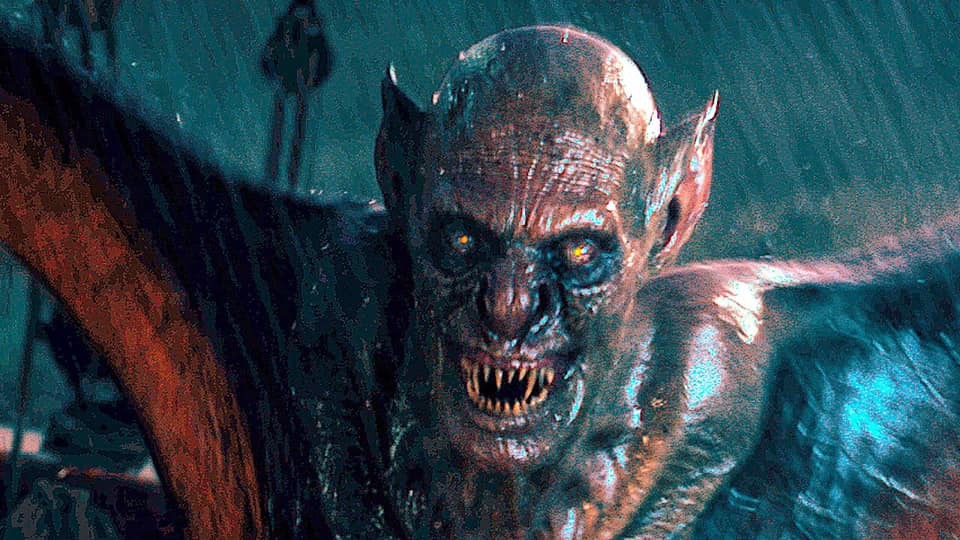
The legend of Dracula is explored from a new angle with The Last Voyage of the Demeter, based on “The Captain’s Log,” the seventh chapter in Bram Stoker’s influential novel.
The film’s home video release includes an audio commentary with director André Øvredal (Scary Stories to Tell in the Dark, The Autopsy of Jane Doe) and producer Bradley J. Fischer (Shutter Island, Black Swan), among other special features.
Here are eight things I learned from the Last Voyage of the Demeter commentary:

1. The Last Voyage of the Demeter spent 21 years in development.
Phoenix Pictures acquired the rights to the film, originally titled Demeter, over two decades before the movie made its way to the screen.
“It’s been a solid 21 years since my producing partners, Mike Medavoy, Arnie Messer, and I, optioned the screenplay that we adapted into this film,” Fischer explains at the beginning of the commentary.
“And I’ve been part of it for something like three years, I think,” adds Øvredal. “We started on it before the filming before the pandemic and worked through the pandemic, and obviously filmed mid-pandemic.”
David Slade (30 Days of Night), Neil Marshall (The Descent), Marcus Nispel (The Texas Chainsaw Massacre), Robert Schwentke (Red), and Stefan Ruzowitzky (Deadfall) are among the directors who were attached to the project at various points during its incubation.
2. The movie shares filming locations with Gladiator.
The sequences at the Bulgarian port at the beginning of the film were shot in Malta, sharing filming locations with Ridley Scott’s Gladiator.
“Inside that building is where Russell Crowe first emerges into the coliseum in Gladiator through that corridor,” gushes Fischer. “We were giving ourselves our own self-guided tour of those sets.”

3. The script was written on spec.
Screenwriter Bragi F. Schut (Escape Room) used “The Captain’s Log” as “narrative guide posts” to flesh out the fractured story into a feature. It was written as a spec script, meaning that it was done unsolicited in the hopes of being sold as opposed to being commissioned.
The gamble paid off, as Fischer was attracted to the focus on the novel’s pivotal sequence, which is often overlooked in Dracula adaptations. He explains:
“This story of the Demeter has appeared in various Dracula films — from Nosferatu, the 1922 Weimar period [F.W.] Murnau film, to [Francis Ford] Coppola’s Dracula — this story that we’ve dramatize for the entirety of the film, that we told with this movie, really amounted to not much more than shoe leather, sort of connective tissue in other Dracula movies over the years.”
Schut receives a story credit in addition to sharing writing credit with Zak Olkewicz (Bullet Train).
4. Dracula’s wolf form was intended to appear in the movie.
In the original novel, Dracula is a shapeshifter who can also take the form of a wolf, in addition to the more well-known bat. The lycan appears in film’s alternate opening, included on the disc, after the captain’s corpse is revealed tied to the ship’s helm.
“While so many people know Dracula the character, not that many people know the story, and not many people know that he, in addition to a bat, takes the form of a wolf in some instances. What we discovered in test screenings was that some people were confused about all of these various forms that he took,” Fischer reveals.
The wolf would have later returned when he claims his first human victim in the movie, Petrofsky, but that was replaced with the emaciated version of Dracula once the opening was changed.
“We really had a very spirited debate about whether we should stick to the wolf in that scene or whether the burden of that potentially for a wide audience was too much. I think what we landed on actually is not a compromise, because I think what it does is it sort of dramatizes him in more of the man form than in the lycan form. And I think it’s pretty scary… I hope!” note Fischer.

5. The original script was all men.
Schut’s original script did not have the character of Anna, Dracula’s unwitting stowaway played by Aisling Franciosi, and instead focused on the all-male crew.
“It was actually the first note I gave Bragi, because the initial spec script did not have a woman on board,” says Fischer. “It was just a fully male crew.”
The film nearly featured two other women, albeit as corpses, that were discovered by Clemens and Anna to have been stowed away by Dracula for nourishment. The sequence can be seen among the deleted scenes on the disc.
6. It was important to show Dracula speak.
Although Dracula only speaks a few words in the film, it was important to the filmmakers to show that he was an intelligent being rather than merely a feral animal. Fischer explains:
“It was really important that, while we did embrace this concept of the more feral, animalistic Dracula, he wasn’t just an animal, he wasn’t just this sort of lower-level intelligence that’s simply pursuing blood to consume and didn’t have higher faculties. So we wanted to make sure, especially where the movie goes as he evolves and where it ends with him in the tavern, that when he gets to London he’s able to mingle and mix into society.”
He continues, “Even though it’s brief and not very involved, the fact that he can speak and communicate was something that we wanted to make sure was there so that we could distinguish him from just some beast.”

7. Woody Norman’s reaction to seeing the creature for the first time is genuine.
The first scene shot with Javier Botet as Dracula was when he preys on Toby, played by 12-year-old Woody Norman. Norman didn’t see the creature until that moment in order to elicit a genuine reaction.
“To scare Woody, we didn’t let Woody see him in the full gear so that when we actually shot the close ups of Woody reacting to seeing him, he literally walked up in front of him for the first time as we were filming Woody,” Øvredal says.
A prosthetic was made for an insert shot of Dracula sinking his fangs into Toby’s neck, but it had to be cut for time. “I guess the scene is scary enough as is, but that would have been nice,” laments Fischer.
8. The film has nods to The Amityville Horror, The Beastmaster, and more.
While Nosferatu was a key inspiration on the creature design, and Alien has been cited as a major influence on the film, the commentary reveals nods to several other classic films.
When the crew explores the hold, objects ominously illuminated by a lantern are “a little homage to The Amityville Horror, the haunted house with the two eyes,” says Øvredal.
An American Werewolf in London was used as a point of reference when the monster kills Petrofsky. Dracula’s wings were influenced by Coppola’s take on Dracula, while a scene in which he envelopes Anna in the wings was inspired by The Beastmaster.
The Last Voyage of the Demeter is available now on Blu-ray, DVD, and Digital.





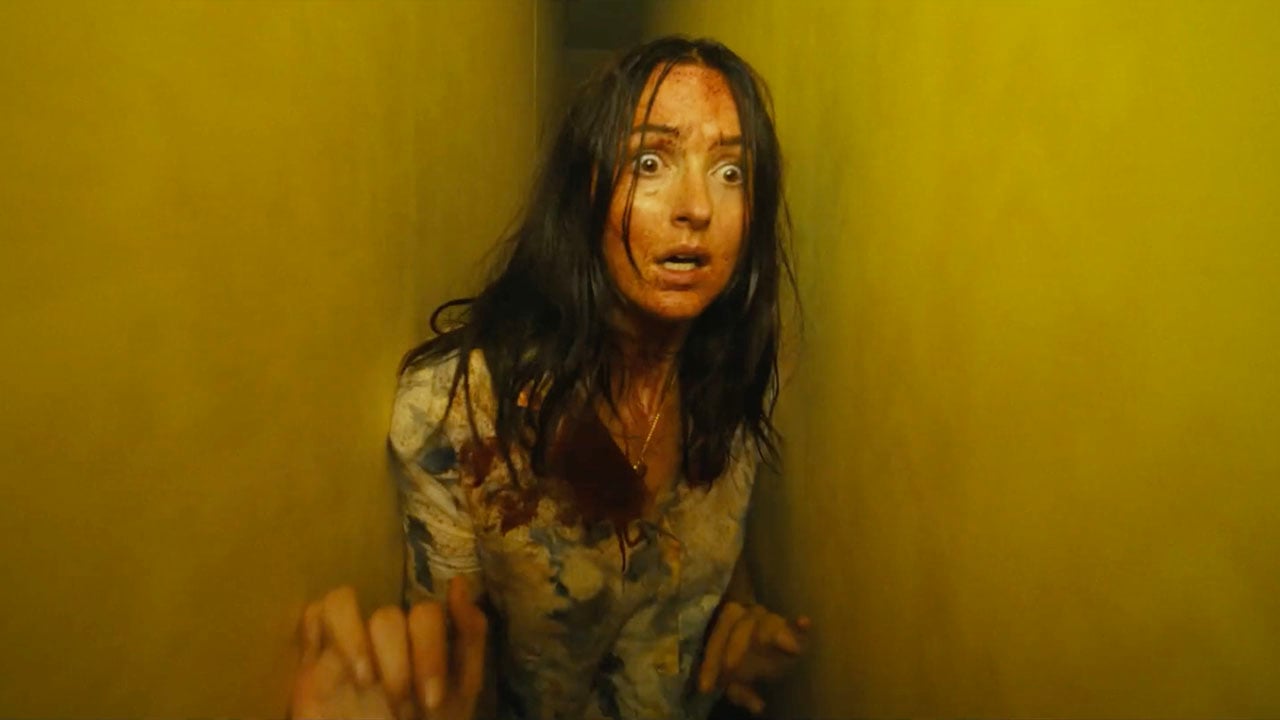
Judging from the unprecedented box office success of Kane Parsons’ Backrooms adaptation, you’ve likely already seen the liminal horror hit that managed to make audiences afraid of empty hallways and bad wallpaper. And now that so many of us have already entered the yellow labyrinth (some of us more than once), the time has come to discuss the spoiler-filled details that make the movie so fascinating in the first place.
And if there’s one element here that makes the Backrooms movie stand out from any previous lore/mythology, it has to be the genius addition of the Still Life entities. Warped recreations of real people that somehow wandered into the Complex, these misremembered creatures are responsible for some of the most disturbing imagery of 2026 – as well as laugh-out-loud memes created by one of the film’s very own concept artists.
However, true to Parsons’ word that the movie would rely heavily on practical effects, each of these distorted monsters was brought to life by real actors under heavy layers of makeup and prosthetics (with the occasional splash of CGI enhancements). While Anora and If I Had Legs I’d Kick You actress Ivy Wolk wasn’t among these performers, despite what Letterboxd might have you believe, the creature cast did benefit from veteran players with plenty of genre experience.

For starters, Alien: Romulus alumni Robert Bobroczkyi (who previously brought that film’s horrific Offspring to life during its most memorable sequence) plays the flick’s main antagonist, the Still Life version of Captain Clark. And though there was some obvious CGI involved in making the character’s peg-leg and nightmarish face more believable, Bobroczkyi’s monstrous performance and his natural 7’7″ frame helped to make that final chase sequence a clear highlight among this year’s genre offerings.
The film’s Texas-Chain-Saw-inspired “dinner” scene also features a freaky collection of less-aggressive Still Life creatures in the form of the Bearded Man, the Red-Headed Woman and, strangest of them all, the cheekily named “Archibald Leland Sutter Still Life” (who earned this title among fans and crewmembers as a reference to his apparent affinity for lamps).
While this was the first major horror outing for both Patrick Baynham (The Bearded Man) and Dana Mahmood (Archibald), Rhiannon Roberts has worked as a stunt performer in everything from Yellowjackets to HBO’s The Last of Us adaptation – which is probably why The Red-Headed Woman is the most active out of Clark’s impromptu “family.” That being said, the Archibald Leland Sutter Still Life is my personal favorite of the bunch simply because his anachronistic outfit suggests that the Backrooms phenomenon might be a lot older than the Async Foundation. I also love how hard he tries to be helpful with that little light of his!

That might be it for the Still Life entities, but I think horror fans will also be pleased to hear that the film’s Found Footage prologue stars none other than Resident Evil: Welcome to Raccoon City star Avan Jogia as Naren Warne – and American Mary herself Katharine Isabelle also shows up in a blink-and-you’ll-miss-it cameo at Mary’s house party towards the middle of the story (though I have a feeling that she originally had a bigger part that was likely cut for time).
At the end of the day, Parsons’ Backrooms may have been an auteur-driven project motivated by the young director’s unique take on the classic creepypasta, but film has always been a collective artform, so it’s fun to see just how many talented performers it takes to bring this kind of supernatural nightmare to life in a way that connects with so many people.

You must be logged in to post a comment.