Movies
The Battle for the ‘Friday the 13th’ Rights Rages On

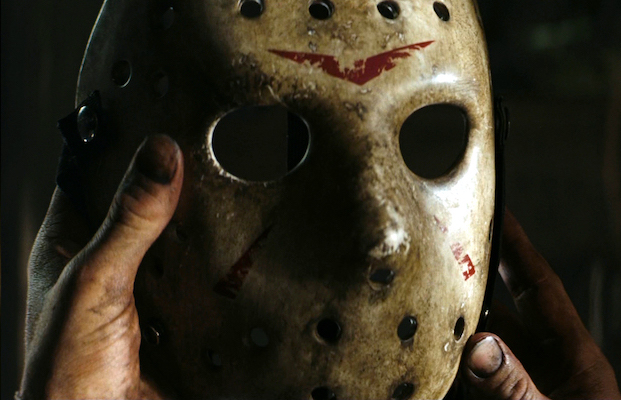
The Hollywood Reporter has a lengthy update on the Friday the 13th rights battle.
They report that Victor Miller, the screenwriter of Friday the 13th, has responded to a lawsuit over rights to the 1980 horror classic with two consequential motions.
In June, Miller sent a notice of termination to producers with the aim of grabbing back rights to Friday the 13th. In doing so, Miller looked to exploit changes that Congress made to copyright law in 1976. Back then, lawmakers lengthened the copyright term, but, in recognition of authors who had signed over their rights to publishers and studios without much bargaining power, allowed these authors to reclaim rights in the latter stages of a copyright term. Specifically, authors have to wait 35 years to cancel rights hand-offs, and here, Miller wants to effectuate a Friday the 13th copyright termination in July 2018, which potentially would allow him to license the franchise to other studios.
In late August, producer Horror, Inc. and Manny Company filed a lawsuit in Connecticut federal court upon receiving Miller’s notice of termination. The copyright termination provisions has an exception for a “work made for hire,” that is a work prepared by an employee within the scope of his or her employment. Under this scenario, the employer is deemed to be the statutory author.
Horror, Inc. and Manny Company, a successor to Georgetown Productions, claims in its suit that this is what happened in the development of the original Friday the 13th. Miller’s friend Sean Cunningham had wanted to capitalize on the success of the film Halloween, and worked with Miller to develop ideas. Miller signed an agreement to write the screenplay in exchange for a lump- sum payment.
But in a motion to dismiss filed Monday (read here) by Miller’s attorney Marc Toberoff — no stranger to copyright termination battles after litigating Superman, Lassie and other works — the argument is put forward that Friday the 13th was hardly a “work made for hire.”
“While the Screenplay was clearly commissioned by Manny for use as part of a motion picture, the Film, Plaintiff never alleges that a written instrument signed by Manny agreeing the Screenplay shall be considered a ‘work made for hire,’ ” states the motion. “And the Agreement attached to the Complaint, and alleged by Plaintiffs to be Miller’s operative agreement, does not contain any such express agreement, nor even the phrase ‘work made for hire’ or ‘work for hire.’ ”
The absence of an express agreement in writing providing that Miller’s screenplay was to be considered a work made for hire dooms the claim, the defendants argue.
Miller also addresses whether he was an “employee” at the time, saying that the seminal 1989 Supreme Court case (CCNV) on the topic referred to a conventional employment relationship.
“CCNV drew a clear distinction between an ’employee’ and an independent contractor, stating that ‘when Congress has used the term ‘employee’ without defining it, we have concluded that Congress intended to describe the conventional master-servant relationship as understood by [the federal] common-law agency doctrine.’ ”
Several cases before the 2nd Circuit Court of Appeals, which covers Connecticut, have since refined the tests for an employment relationship, including the Toberoff-driven lawsuit over Jack Kirby’s Marvel works. That one was almost reviewed by the U.S. Supreme Court before being settled without the high court’s added guidance over how to interpret who is an “employer” for commissioned works. As such, the 2nd Circuit’s “instance and expense” test is still operative. As the Friday the 13th lawsuit proceeds, a judge may look at factors including the producer’s right to control the manner and means of creation.
There’s a lot more legal mumbo jumbo at the link at the top of the page, but if Miller can exploit this loophole he’d have the rights to shop come July 2018. The good news is that this shouldn’t affect the next Friday the 13th, which was recently shifted to release on Friday, October 13th, 2017.
The Crazies‘ Breck Eisner is in talks to direct the slasher with Prisoners‘ Aaron Guzikowski writing the script. The film is, according to producer Brad Fuller, “an origin-ish story.”


Movies
R-Rated ‘The X-Files: I Want to Believe’ Director’s Cut Gets New Title and Streaming Premiere Date

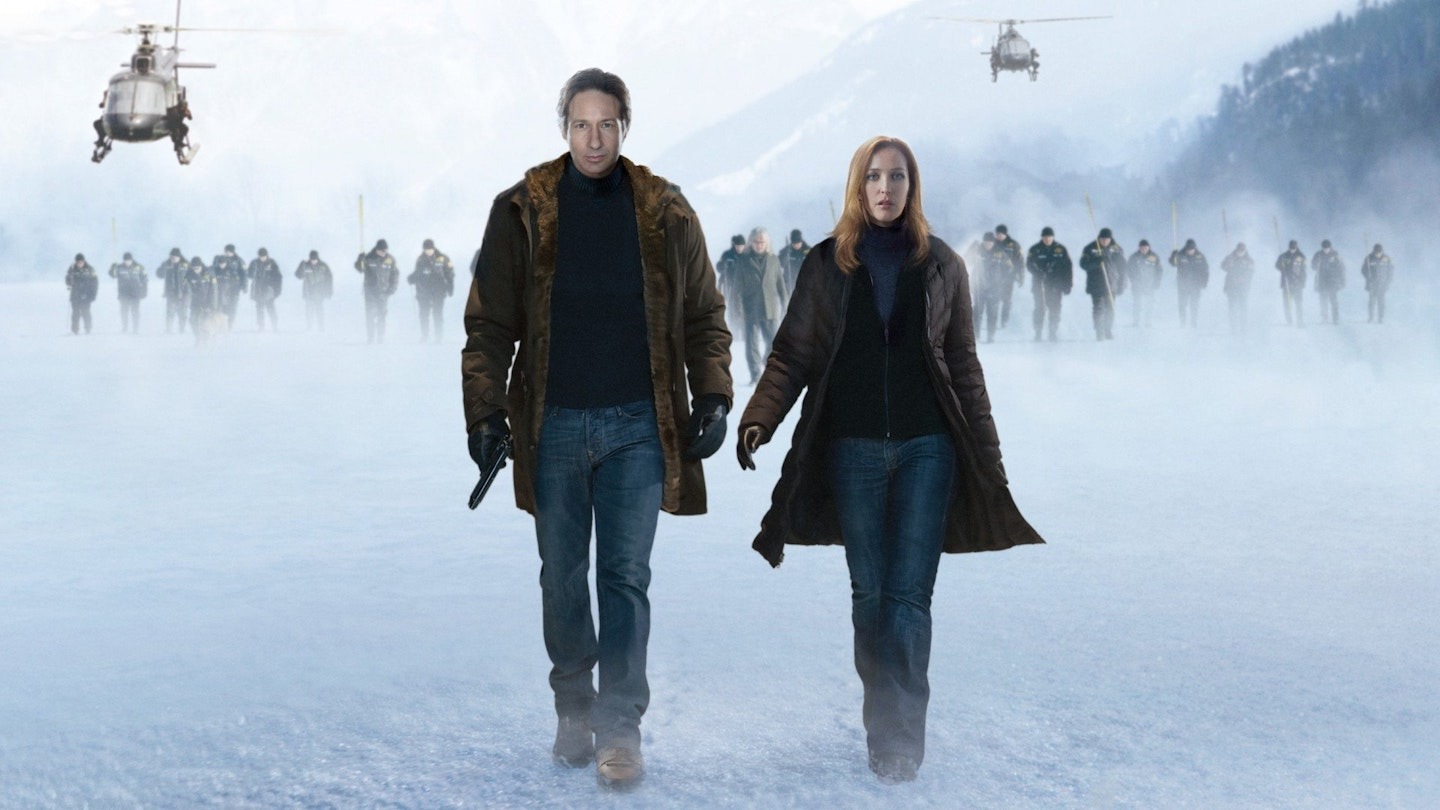
After a slight delay, Disney has finally announced a new streaming date for the R-Rated director’s cut of The X-Files: I Want to Believe. According to Gizmodo, it’ll also come with a new title.
The X-Files: I Want to Believe Vrach Frankenshteyn begins streaming on Hulu on August 14.
The new cut was first teased in an interview with director Chris Carter on the Fail Better With David Duchovny podcast from last year, where he teased a much scarier movie he intended.
“Now I have a chance to go back and make the scary movie that I always intended to make,” Carter explained last year. “It’s not just doing a Director’s Cut to do a Director’s Cut. It’s really kind of bringing to life something that for me was on the page and never got to the screen.“
The director’s cut of the film was initially set to arrive on Disney+ in June, but quietly disappeared from the schedule without a word. Polygon reported the delay was “due to some last-minute adjustments being made to the film.”
The release’s new “Vrach Frankenshteyn” title certainly suggests those adjustments have been made, likely referring to a Frankensteining of bonus footage.
In the film, Mulder (David Duchovny) and Scully (Gillian Anderson) have been out of the FBI for several years, with Mulder living in isolation and Scully having become a doctor at a Catholic hospital, where she has formed a bond with a critically ill child patient.
When an FBI agent is mysteriously kidnapped, and a former Catholic priest who has been convicted of pedophilia claims to be experiencing psychic visions of the endangered agent, Scully is asked to bring Mulder back to the bureau to consult on the case because of his work with psychics.
The brand new R-rated cut will “faithfully restore the filmmaker’s original vision.”
Look for it on Hulu next month.